







The Ever-Awake Tree
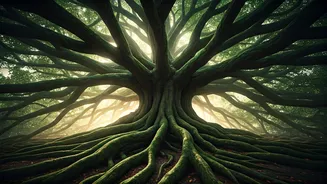
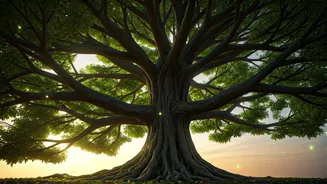
The Peepal tree, known scientifically as Ficus religiosa and revered as Ashvattha in Vedic traditions, holds a unique place in Indian spirituality and folklore.
Unlike most other trees, it possesses the remarkable ability to continuously release oxygen, even through the night. This ceaseless exhalation of life-giving air is the primary reason behind its moniker, 'the tree that never sleeps.' Ancient sages recognized this extraordinary characteristic, associating it with immense vitality and a profound connection to the spiritual realm. Its constant energetic output and life-sustaining properties have led to its veneration as the 'King of trees,' believed to be a conduit between the earthly and the divine planes, embodying the essence of Brahma, Vishnu, and Mahesh.
Leaves Sensing Air
The perpetual rustling and movement of Peepal leaves have long fueled tales of the supernatural. Scientifically, however, this phenomenon is attributed to the leaves' extreme sensitivity to atmospheric energy fluctuations. They act as highly attuned detectors, capable of perceiving even the subtlest shifts in the surrounding environment. This sensitivity is poetically likened to a human mind, constantly reacting to external stimuli. The sturdy trunk, in contrast, symbolizes the unwavering soul, providing steadfast support. This intricate interplay between the dynamic leaves and the resilient trunk further deepens the tree's mystique and its perceived connection to unseen forces.
Divine Abode
The Peepal tree is considered a sacred dwelling place for deities, deeply embedded in Hindu scriptures. According to the Padma Purana, it symbolizes the Holy Trinity, with Lord Vishnu residing in its roots, Lord Keshav in the stem, and Lord Narayana in the branches. The leaves are believed to host all other gods, making the tree an embodiment of the divine. This profound reverence is why it is rarely felled, preserving the sanctity of its divine inhabitants. Lord Krishna himself identified with the Ashvattha in the Bhagavad Gita, reinforcing its status as a symbol of God and a nexus of spiritual energy, profoundly influencing its worship and protection.
Ancestral Bridge
Beyond its connection to the gods, the Peepal tree serves as a spiritual conduit for ancestors, bridging the realms of the living and the departed. Many believe that offerings of water poured at its roots help guide and sustain ancestral souls. The tree is thought to absorb residual energy from the past, making it a site for appeasing spirits. The ritual of lighting lamps beneath the Peepal tree on Saturdays is specifically observed to honor Shani (the planet Saturn) and to invoke peace and well-being. This practice highlights the tree's role in ancestral veneration and spiritual reconciliation.