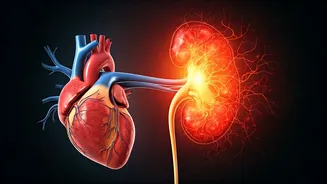




The Kidney-Heart Connection
For a long time, medical professionals have observed a strong correlation between chronic kidney disease (CKD) and an increased risk of cardiovascular
issues. It's well-established that as kidney function deteriorates, the likelihood and severity of heart problems escalate. However, pinpointing the exact cause of this association has been challenging. Factors like obesity and high blood pressure, which are risk factors for both conditions, often complicate efforts to isolate whether CKD itself is the direct culprit in damaging the heart. This uncertainty has left a significant gap in understanding how these two vital organs interact and influence each other's health, impacting millions of lives globally, particularly in countries like India where lifestyle diseases are prevalent.
Toxic Signals Revealed
New research has shed light on a specific mechanism through which damaged kidneys can harm the heart. Scientists have identified that compromised kidneys release tiny particles into the bloodstream called circulating extracellular vesicles (EVs). These EVs, normally utilized by cells for communication, are altered in CKD. Specifically, EVs originating from diseased kidneys carry a particular type of small RNA, known as miRNA, which has been found to be toxic to cardiac cells. This breakthrough provides a concrete, kidney-specific factor that explains the observed damage to the heart, moving beyond shared risk factors and offering a direct pathway for understanding the disease progression.
Evidence From Studies
The findings supporting this theory come from robust laboratory and clinical investigations. In experiments involving laboratory mice, researchers observed significant improvements in heart function and a reduction in heart failure indicators when the circulation of these harmful EVs was blocked. Further bolstering these results, the team analyzed blood plasma from human patients diagnosed with chronic kidney disease and compared it with samples from healthy individuals. The study consistently detected the presence of these damaging EVs in patients with CKD, while they were absent in those without the condition. This dual evidence strongly suggests a direct causal link between kidney-derived EVs and cardiac distress.
Future of Treatment
This groundbreaking discovery holds immense potential for transforming how we approach heart health in CKD patients. The identification of these toxic EVs opens avenues for developing novel diagnostic tools. It is envisioned that a simple blood test could soon be developed to identify individuals with CKD who are at a higher risk of experiencing severe heart complications. Furthermore, this research paves the way for targeted therapeutic interventions. Scientists may be able to design treatments aimed at neutralizing or clearing these circulating EVs, thereby mitigating their damaging effects on the heart and potentially preventing or reversing heart failure. This could usher in an era of precision medicine for CKD and heart failure patients, ensuring individualized care.