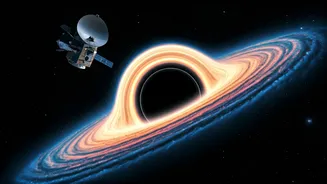

Euclid's Cosmic Gaze
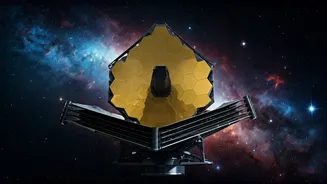
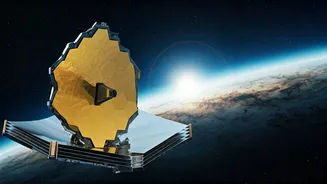
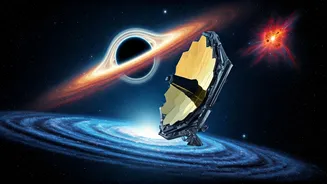
The Euclid space telescope, with its advanced capabilities, has played a pivotal role in observing the distant universe and gathering invaluable data about
galactic structures. It's designed to investigate the distribution of dark matter and dark energy, and it has inadvertently contributed significantly to the comprehension of galaxy dynamics. Through meticulous observation, Euclid has provided compelling evidence regarding the interplay between merging galaxies and the activation of supermassive black holes. The telescope’s detailed mapping of galactic structures and their interactions has empowered scientists to gain a more thorough understanding of these processes that shape the universe. The precision of the Euclid mission has also paved the way for advanced modeling and simulation of cosmic events, offering a deeper dive into these previously obscure cosmic phenomena.
Merging Galaxies Unveiled
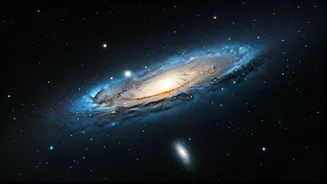
Galaxies, vast collections of stars, gas, dust, and dark matter, are not static entities; they evolve through mergers and interactions. When galaxies collide and merge, they unleash a symphony of gravitational forces and material interactions that are crucial to understanding galaxy evolution. These mergers can trigger a cascade of events, from gas compression to the formation of new stars, and even the activation of supermassive black holes located at the centers of these galaxies. The Euclid telescope observed various galaxies during their collision phase, offering scientists insights into the nature of mergers. The telescope’s capacity to detect subtle changes in galactic structures has allowed the observation of the effects of these gravitational interactions, improving understanding of how they affect the formation of stars and the behavior of the black holes.
Black Hole Activation
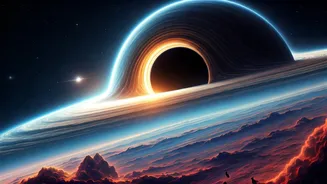
Supermassive black holes, lurking at the heart of most galaxies, are immensely dense regions of spacetime with a gravitational pull so strong that nothing, not even light, can escape. These colossal entities are often in a quiescent state, but galaxy mergers can jolt them into activity. As galaxies collide, the gas and dust within them are funneled towards the central black holes. This influx of material causes the black holes to “wake up,” accreting matter and releasing tremendous amounts of energy in the process, which is often visible in the form of bright quasars or active galactic nuclei. Euclid data has pinpointed a direct link between the rate of galactic mergers and the enhanced activity of supermassive black holes, providing crucial evidence to support this hypothesis. This insight refines the comprehension of the role these black holes play in galaxy evolution.
Cosmic Implications
The discoveries made by Euclid have far-reaching implications for our understanding of the universe. By connecting galaxy mergers with the activation of supermassive black holes, scientists gain a clearer view of the dynamic processes that drive galactic evolution. These mergers play a key role in the formation of new stars, the shaping of galactic structures, and the growth of black holes. Furthermore, the Euclid data reinforces the idea that supermassive black holes are not isolated entities, but rather integral components of the galactic environment, influencing the evolution of their host galaxies. Understanding these interactions will help refine cosmic models and provide a framework for comprehending the universe's evolution. The continuing observations will further illuminate the intricate dance between galaxies and the black holes at their cores.