



Mapping Auroral Currents
The awe-inspiring spectacle of the aurora borealis, or northern lights, is a direct consequence of energetic electrons descending from space and igniting
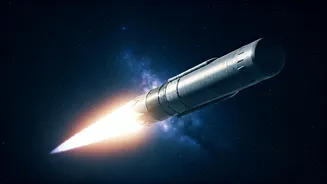
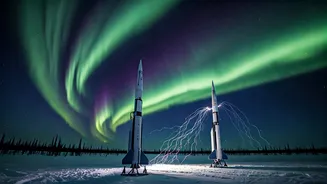
the Earth's atmosphere. For these electrons to create the vibrant light displays we observe, they must follow specific, often circuitous, pathways. Precisely charting these paths is a significant challenge. NASA's Geophysical Non-Equilibrium Ionospheric System Science (GNEISS) mission is designed to tackle this by launching two rockets from Alaska's Poker Flat facility in early February 2026. Each rocket will release four smaller sub-payloads. These sub-payloads will transmit radio signals towards ground-based receivers. The journey of these radio signals is subtly altered by the ionospheric plasma, much like how human tissues affect the X-ray beams in a medical CT scanner. By meticulously analyzing these alterations, scientists can reconstruct a detailed, three-dimensional map of the electron density and their directional flow, effectively mapping the hidden electric currents that sculpt the aurora.
Space Weather Implications
Understanding the dynamics of auroral currents is not merely an academic pursuit; it is crucial for comprehending and predicting 'space weather.' These electric currents act as conduits, channeling vast amounts of energy into the Earth's upper atmosphere. This influx of energy can lead to significant atmospheric heating and turbulence, posing substantial risks to the reliable operation of satellites. These disruptions can affect everything from communication systems to navigation technologies. To mitigate these risks, scientists are aiming to develop sophisticated predictive models. The data gathered by the GNEISS mission, combined with observations from NASA's satellite launched in March 2025, will be instrumental in this effort. Furthermore, NASA is planning an additional rocket mission to investigate the peculiar phenomenon of 'black auroras,' dark patches believed to signify reversals in current flow, offering another layer of complexity to our understanding.