




Cloud 9 Unveiled
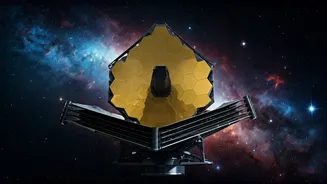
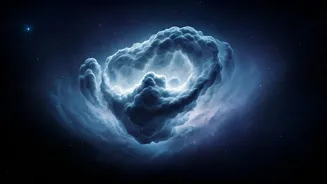
The Hubble Space Telescope's recent observation of Cloud 9 has sparked considerable interest in the scientific community. Cloud 9, a dark matter cloud
devoid of stars, offers an exceptional chance to observe dark matter without the interference of stars. The conventional approach to studying dark matter involves observing its gravitational effects on visible matter, such as galaxies and stars. However, Cloud 9 allows for direct study, which is a considerable advancement. This discovery enables scientists to examine the characteristics and distribution of dark matter more accurately. Such data is essential in understanding the universe's structure, the formation of galaxies, and the role dark matter played in the early cosmos. The ability to directly observe dark matter without stellar interference could help resolve many current cosmological issues.
Dark Matter's Role
Dark matter is a mysterious substance that accounts for around 85% of the total mass of the universe. Though it has not been directly observed, its presence is inferred through its gravitational effects. This invisible substance influences the way galaxies rotate and cluster. Cloud 9's discovery allows for detailed investigations into dark matter's composition and interactions. Research may delve into how dark matter interacts with itself and with ordinary matter. Understanding these relationships is vital. Scientists aim to refine current models of the universe. By analyzing the characteristics of Cloud 9, astronomers hope to gain insight into the nature of dark matter particles and how they influence the structure of the cosmos. This could lead to a better understanding of how the universe formed and evolved.
Cosmological Implications
The discovery of Cloud 9 has significant implications for cosmology. It could provide essential information about the early universe. Scientists can study Cloud 9 to understand the initial distribution of dark matter after the Big Bang. The analysis might show how dark matter influenced the initial formations in the universe. Such information is crucial for testing and refining models of the universe's evolution. By studying the distribution and structure of the cloud, researchers may be able to better simulate the growth of the universe. This will enable scientists to construct a timeline that aligns with observed cosmic phenomena. Ultimately, the observations could reveal new insights into the initial conditions of the universe, leading to a more complete and accurate understanding of cosmic evolution.
Future Research Prospects
The finding of Cloud 9 presents many opportunities for future research. Telescopes and advanced instruments will be used to explore and study the cloud. Scientists are developing new models and simulations that will help interpret observations and understand the behavior of dark matter. Collaboration between different research groups and institutions is another facet of future research. Data collected will be shared and analyzed. Scientists will work together to build a broader understanding of Cloud 9. These collaborative efforts will accelerate the pace of discoveries. The study of Cloud 9 offers a unique opportunity. It helps to unravel one of the biggest mysteries in modern physics. Further studies will help refine our comprehension of the cosmos.