





Hidden Ecological Threat
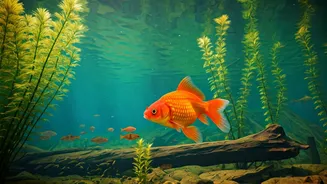
The familiar goldfish, often kept as a beloved pet, harbors a surprising capacity to destabilize entire freshwater ecosystems. Researchers have meticulously
demonstrated through controlled experiments how the introduction of goldfish into natural aquatic settings can lead to profound and lasting environmental changes. These aquatic invaders disrupt intricate food webs, degrade water quality to alarming levels, and instigate significant shifts in the fundamental structure of these delicate habitats. The seemingly benign act of releasing a goldfish into a local pond or lake, often perceived as a compassionate gesture, can instead unleash a cascade of ecological damage, transforming a once-thriving environment into a degraded state that is challenging and costly to restore. This transformation underscores the critical need for public awareness regarding the potential ecological consequences of owning and improperly disposing of pet fish.
Experimental Ecosystem Disruption
To rigorously assess the ecological impact of goldfish, scientists employed large-scale, controlled outdoor experiments designed to replicate actual lake conditions. These mesocosms allowed for direct observation of how goldfish influence freshwater systems. Goldfish were introduced into simulated environments representing both nutrient-poor (oligotrophic) and nutrient-rich (eutrophic) waters. The findings were stark: water quality deteriorated rapidly, especially in nutrient-rich settings, leading to a significant decrease in water clarity and an increase in suspended particles, signaling a severe imbalance. Furthermore, native species across various trophic levels experienced substantial declines. Small invertebrates crucial to aquatic food webs, such as snails, amphipods, and zooplankton, were drastically reduced due to direct consumption and habitat disturbance by the goldfish. Even native fish populations suffered, facing increased competition for food and resources, which negatively affected their body condition – a key indicator of long-term population health. These detrimental effects were observed in both types of tested lake conditions, proving that no freshwater ecosystem is immune to the invasive capabilities of the goldfish.
Regime Shifts and Invasive Spread
The study meticulously examined the effects of goldfish using experimental designs that distinguished their impact from that of general fish density. While some alterations in plant communities were linked to the total number of fish present, the most severe disruptions were definitively attributed to the goldfish themselves. Researchers documented a phenomenon known as a 'regime shift,' where an ecosystem reaches a tipping point and undergoes a rapid reorganization into a new, often degraded state. Once this critical threshold is crossed, the ecosystem's recovery becomes exceptionally difficult and prohibitively expensive. The global pet trade facilitates the widespread distribution of species like goldfish across continents. When these fish enter natural waterways, whether through intentional release or natural events like flooding, they can rapidly establish invasive populations. These large goldfish then actively stir up lake sediments, consume vast quantities of prey organisms, and fiercely compete with native fish, further exacerbating the ecological damage and pushing the ecosystem towards an irreversible degraded state.
Call for Action and Prevention
In light of these findings, researchers are urging natural resource managers to prioritize goldfish as a significant invasive species, advocating for early intervention through prevention, monitoring, and control measures. A crucial component of this effort involves enhancing public education to ensure pet owners fully grasp the profound risks associated with releasing aquatic animals into the wild. For individuals who find themselves unable to care for their goldfish, several responsible alternatives exist. These include returning the fish to a pet store, rehoming them with other aquarium enthusiasts, or contacting local wildlife agencies for guidance on appropriate management strategies. Proactive public awareness campaigns and accessible responsible rehoming options are essential to mitigate the ecological threat posed by this common, yet potentially devastating, invasive species.