






Plastic's Pervasive Presence
Scientific inquiry has increasingly focused on airborne plastic pollution, yet a comprehensive understanding of its presence and health effects remains
elusive. New chemical analyses from Leipzig, Germany, have now provided the first detailed data for the region, revealing that plastic particles constitute roughly 4 percent of the total particulate matter in urban air. A significant majority, around two-thirds, of this plastic originates from the abrasion of tires. This suggests that individuals in urban environments may inhale a notable amount of plastic daily. For instance, in a city like Leipzig, projections indicate an daily inhalation of approximately 2.1 micrograms of plastic. This level of exposure is concerning, as it is associated with an elevated risk of mortality from cardiovascular disease (a 9 percent increase) and lung cancer (a 13 percent increase). These findings, published by researchers from the Leibniz Institute for Tropospheric Research (TROPOS) and Carl von Ossietzky University Oldenburg in the journal Communications Earth & Environment, strongly emphasize the urgent necessity for global strategies to combat plastic pollution. Furthermore, the study calls for more localized research into air quality and its specific health consequences. This groundbreaking work was supported by the Leibniz Association's "AirPlast" project, highlighting a collaborative effort to address this emerging environmental and health challenge.
Challenges in Detection
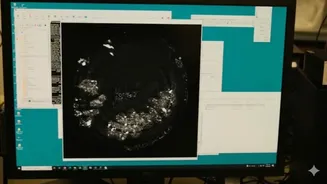
Identifying and quantifying microplastics in the environment presents a significant scientific hurdle. The term 'plastic' itself encompasses a vast array of materials with diverse chemical properties, making a universal detection method impractical. Scientists typically employ a combination of analytical techniques to gain a comprehensive understanding. Spectroscopic methods are crucial for examining a particle's structural and surface attributes, while mass-based techniques help determine the overall quantity. However, the analysis of very small particles, particularly nanoplastics (defined as plastic fragments smaller than 1 micrometer), within complex environmental samples remains exceptionally difficult. Standard optical methods often lack the precision needed for reliable detection at the nanometer scale, and definitively identifying the specific polymer type at these minuscule sizes is still a considerable challenge. To overcome these obstacles, pyrolysis gas chromatography-mass spectrometry (Py-GC-MS) has emerged as a key analytical tool. This technique involves rapidly heating samples to break them down into smaller fragments, which are then separated and identified using gas chromatography and mass spectrometry. Because no standardized reference materials for detecting various polymers currently exist, the research team had to develop their own analytical protocols. They selected 11 prevalent plastic types, including those found in tire wear particles (TWPs) like polyethylene (PE), polypropylene (PP), and polyvinyl chloride (PVC), alongside PET, PS, PMMA, PC, PA6, and MDI-PUR. The researchers meticulously characterized the unique analytical "fingerprint" of each material using commercially sourced raw polymers. These fingerprints were then compared against data obtained from air samples collected in Leipzig, enabling precise identification and quantification of airborne plastics.
Tire Wear Dominates
The comprehensive analysis of air samples collected in Leipzig revealed that tire wear particles (TWPs) constitute the predominant source of microplastics found in urban air. Specifically, these particles accounted for approximately 65% of the total plastic content identified in the sampled air. Following tire abrasion, other significant contributors included polyvinyl chloride, polyethylene, and polyethylene terephthalate. The study observed strong correlations between the presence of these polymers and carbon-containing aerosol markers. This association strongly suggests a shared origin, indicating that these plastic particles and other atmospheric pollutants are emitted together and undergo atmospheric mixing. The research methodology involved collecting particulate matter samples categorized as PM10 (particles smaller than 10 micrometers) and PM2.5 (particles smaller than 2.5 micrometers). This was achieved using two high-volume samplers, mirroring the equipment used in standard air monitoring stations across Europe. Each sampler processed 500 liters of air per minute through a sophisticated filter system, with filters being replaced every 24 hours. Subsequent laboratory analysis of these filters employed pyrolysis gas chromatography and mass spectroscopy to identify and quantify the plastic components. The data collection spanned two weeks, from September 1st to September 14th, 2022, and was conducted in the Science Park on Torgauer Strasse, a location known for its heavy traffic and thus considered a pollution hotspot. This strategic sampling aimed to capture peak urban exposure levels with a fine resolution for particulate matter size, generating high-quality baseline data essential for assessing potential health risks, as noted by Ankush Kaushik, a doctoral student at TROPOS involved in the sample collection and analysis.
Health Risks and Policy Gaps
The study's findings highlight a concerning potential for micro- and nanoplastics to pose significant health risks, despite their relatively low mass concentration. Existing epidemiological models were utilized to estimate the relative health risks associated with environmental exposure to these particles. The projections indicated a potential increase in mortality risk of 5–9% for cardiopulmonary diseases (with a relative risk of 1.08) and an 8–13% increase for lung cancer (with a relative risk of 1.12). These figures are notably higher than the general risks associated with fine particulate matter like PM2.5 in Europe. Researchers suggest that the toxicity might stem from the inherent properties of the polymers themselves or from contaminants that adhere to their surfaces. Due to the complexity and novelty of this research area, regulatory bodies like the World Health Organization (WHO) and the European Union have yet to establish specific recommendations or limits for plastic particles in the air. While plastic pollution in oceans is gaining international attention, leading to discussions for a UN plastics agreement, airborne plastic particles have largely been overlooked in political discourse. Addressing this gap is crucial, as reducing plastic particulate matter in the air aligns with critical Sustainable Development Goals, including Good Health and Well-being (SDG3), Sustainable Cities and Communities (SDG11), and Climate Action (SDG13). The study strongly advocates for the inclusion of tire abrasion in air quality regulations and the establishment of specific limits for microplastics in the air, emphasizing that transitioning to electric mobility alone will not solve the fine dust problem.