



Brain's Hidden Role
While many associate building strength with the physical exertion of muscles, cutting-edge research suggests a profound neural component is at play. Studies,
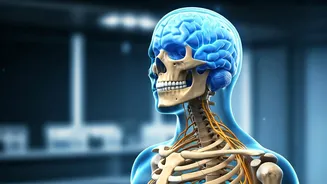
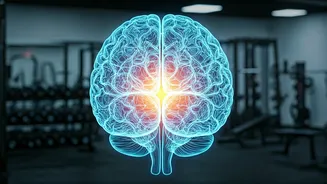
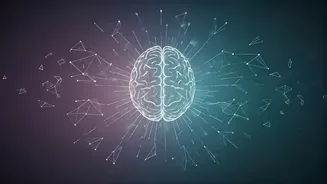
particularly those involving mice, indicate that our capacity for endurance and physical improvement may be significantly dictated by the brain's responses to exercise, rather than solely by muscle adaptation. The process of getting fitter involves more than just pushing your body; it requires your brain to adapt and send the right signals. When you engage in regular physical activity, your muscles, heart, and lungs all benefit and become more robust. However, a crucial insight from recent investigations points to a specific, small area deep within the brain that appears to be essential for these physiological gains to take hold. This implies that the brain acts as a crucial initiator and modulator of fitness improvements, meaning our neural pathways must also evolve for us to truly reap the rewards of our workouts.
The Hypothalamus Connection
New findings spotlight the ventromedial hypothalamus (VMH), a central brain region, as a key player in exercise adaptation. This area, primarily known for its role in regulating metabolism, hunger, and body temperature, was observed to become highly active during exercise in mice. Researchers noted a surge in activity within VMH cells, particularly those expressing the SF-1 protein, during treadmill training. These SF-1 cells are vital for processing bodily signals from hormones like insulin and leptin, influencing how energy is utilized. As the mice exercised over several days, the VMH not only showed increased neuronal activity but also developed more synaptic connections, the communication points between brain cells. This suggests the VMH is actively 'trained' by the exercise, mirroring the physical improvements. The research proposes that this neural engagement is not just a passive response but actively drives the body's ability to enhance endurance and efficiency.
Silencing the Brain's Drive
To understand the causal relationship between VMH activity and exercise benefits, scientists conducted experiments where they selectively deactivated the SF-1 cells in the VMH. Mice whose SF-1 neural activity was suppressed were still able to undergo training, but their progress in terms of increased endurance and speed was significantly hindered. They couldn't run as far or as fast as their counterparts with intact SF-1 signaling. Conversely, when researchers used optogenetics to enhance SF-1 cell activity immediately after training sessions, the mice demonstrated improved endurance. This experimental evidence strongly suggests that the VMH's SF-1 neurons are not merely observers of exercise but are active participants that facilitate and drive the adaptive changes leading to enhanced physical performance. This finding challenges the traditional view that strength gains are purely muscular, highlighting a critical brain-body feedback loop.
Beyond the Treadmill
The influence of the brain on exercise adaptation isn't confined to forced activity. In a broader study, mice were given access to running wheels and ran voluntarily. Even without direct supervision or a treadmill, these mice exhibited a significant drive to run. Crucially, when the SF-1 cells in these voluntarily exercising mice were deactivated, they also failed to experience the fitness benefits associated with their increased movement. This supports the idea that the brain's involvement in adaptation is fundamental, regardless of whether the exercise is prescribed or self-initiated. While this research offers profound insights, it’s important to note the differences between rodent and human physiology. The specific triggers for exercise in mice, potentially linked to stress responses like those from predators, may differ from human motivations. Further investigation is needed to confirm if these specific neural mechanisms operate identically in humans, but the findings open new avenues for understanding how to optimize fitness and potentially treat conditions related to exercise intolerance.