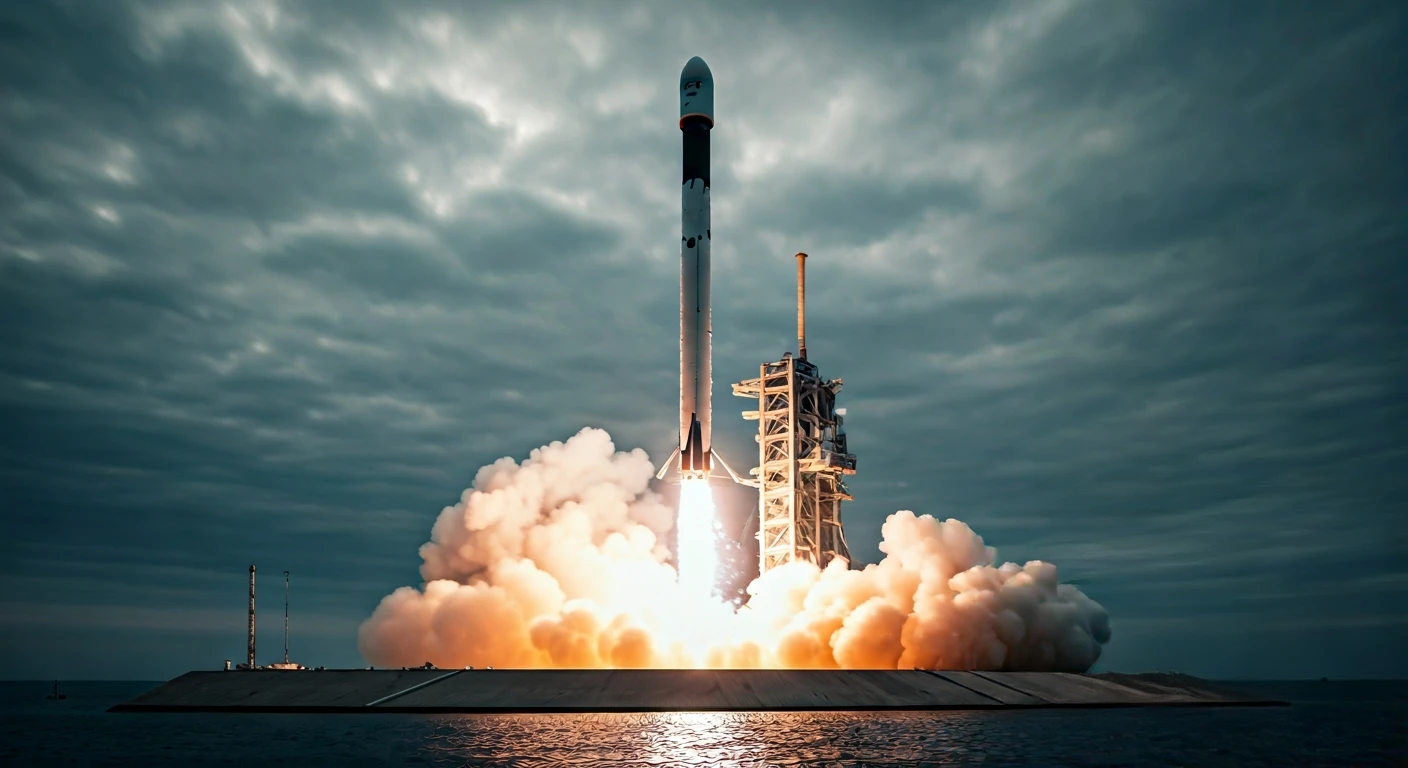







Foggy Ascent
The Falcon 9 launch took place from Vandenberg Space Force Base in California, where the rocket ascended into the sky while engulfed in thick fog. Observers
on the ground were unable to see the rocket immediately after ignition. Instead, they witnessed an orange glow emanating from the launch site as the rocket's engines propelled it upwards. As the rocket rose, it rapidly broke through the low cloud cover. The mission successfully deployed 28 Starlink v2 Mini satellites into Low Earth Orbit. The launch highlighted the challenges and innovations in space missions, particularly the ability to proceed under adverse weather conditions, demonstrating the robustness of launch operations. The launch was the ninth flight for this particular first-stage booster.
Reusable Rocketry
SpaceX has been landing its Falcon 9 first-stage boosters for approximately a decade. This capability allows the company to reuse the boosters on multiple missions, significantly reducing launch costs and increasing the frequency of launches. This practice contrasts with traditional space launch methods. Reusing rocket components is a critical step in the ongoing effort to make space travel more cost-effective. During the launch, the rocket's first stage landed on the _Of Course I Still Love You_ droneship stationed in the Pacific Ocean. This successful landing paves the way for the booster to be used on further missions. SpaceX's focus on reusability has enabled the company to maintain a steady cadence of launches, pushing the boundaries of what is achievable in space exploration. Blue Origin is another company that has adopted the method.
Weather Challenges
The recent Falcon 9 launch highlighted the capacity to conduct launches even in foggy conditions. Fog, composed of low-lying stratus clouds, typically poses fewer risks than other types of cloud formations, such as thick cumulus or anvil clouds, which can trigger lightning strikes. This is because fog is generally found at altitudes that are warmer and well above freezing, reducing the risk of electrical buildup. Launch teams rely more on radar and instrumentation than visual observations during the initial flight phases, allowing them to proceed with the mission. Conversely, certain cloud formations can lead to delays as they may pose hazards such as lightning strikes or the potential for rocket damage caused by the extreme environmental conditions they create.