
Early Universe Exploration
The James Webb Space Telescope (JWST) has been instrumental in exploring the early universe, allowing scientists to peer back in time and observe the formation
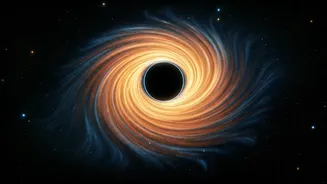
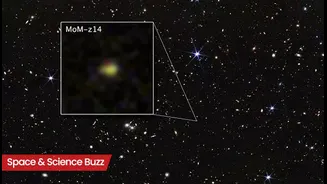
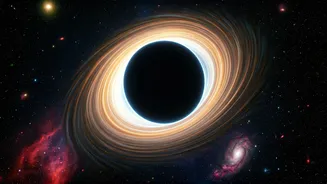
of the first supermassive black holes. These black holes, found at the centers of galaxies, present a significant puzzle in astrophysics: how could such massive structures develop so quickly after the Big Bang? The JWST's advanced infrared capabilities are crucial because the light from these early objects has been stretched by the expansion of the universe, shifting it into the infrared spectrum. This has allowed astronomers to collect data about the formation of these cosmic entities. Moreover, the telescope's ability to observe distant galaxies and quasars provides insight into the environments where these early black holes may have originated, including the composition of gases and the presence of other celestial bodies. Examining the light emitted from these sources offers invaluable clues about the physical processes behind the black holes' growth and evolution. This includes the rate at which matter falls into the black holes, the interplay with surrounding galaxies, and how black holes influenced the formation and development of the first galaxies.
JWST's Revelations
Using the James Webb Space Telescope, researchers are uncovering critical clues about supermassive black holes. By analyzing the light from distant quasars, astronomers have been able to probe the environments around early black holes. JWST's high sensitivity allows for the detailed study of galaxies and the supermassive black holes in their centers. The information collected includes the presence of various elements, such as carbon and oxygen, providing insights into the composition of the early universe. Moreover, the telescope's capacity to observe in infrared is vital, as it lets astronomers observe light that has been red-shifted by the expansion of space. Such observations reveal that supermassive black holes could have formed faster than previously assumed, potentially through direct collapse from large gas clouds. The JWST also helps detect radiation and emissions that serve as markers for the existence of active black holes. This data reveals how early black holes interacted with their surroundings. These revelations are changing the ways astronomers understand how these giants arose and expanded so rapidly in the early cosmos.
Formation Theories Examined
Scientists are considering several models to explain the early formation of supermassive black holes. The 'direct collapse' model suggests that black holes arose from the rapid collapse of massive gas clouds. This process could have occurred in the early universe when conditions were significantly different from today. Another theory, the 'seed black hole' model, proposes that smaller black holes grew by swallowing surrounding matter and merging with others. This process is known as 'accretion'. The role of dark matter, which constitutes a large portion of the universe's mass but does not emit or interact with light, is also being examined. Dark matter's influence on the distribution of matter in the early universe may have played a significant role in creating the conditions for supermassive black hole formation. Furthermore, astronomers investigate how these seed black holes developed in the absence of initial stellar objects. They employ simulations to test these theories, building a comprehensive understanding of the processes behind the formation of black holes. Each model offers different mechanisms that could explain the rapid emergence of these supermassive objects. This research helps refine theories on how galaxies formed and evolved over cosmic time.
Future Research Directions
Future research on supermassive black holes will focus on improving the current understanding of their formation. Astronomers will use JWST and future advanced telescopes to collect more data about the first black holes. One important goal is to pinpoint how quickly these black holes developed and in what environments. Further study is also needed to clarify the role of dark matter and dark energy in their formation. Scientists are planning to use advanced simulations to model different formation scenarios. They are looking to discover the interactions between black holes and their host galaxies and the impact on the formation of stars. This will help them understand how supermassive black holes have influenced galaxy evolution. A clearer comprehension of supermassive black holes could also shed light on the nature of dark matter and dark energy. International collaborations among scientists and space agencies are crucial to exploring the cosmos, and these efforts are vital for addressing some of the most pressing questions in astrophysics. The quest to understand supermassive black holes is a dynamic area of study, continually refined by new observations and insights.