
Sightings and Locations
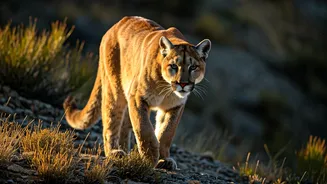
Mountain lions, highly adaptable felines, have been spotted in diverse locations, underscoring their ability to thrive in varied environments. One notable
sighting occurred in San Francisco, where authorities initiated efforts to capture the animal. Another instance involved a sighting in a Texas county, marking a first for the area. In California, several incidents emerged: a mountain lion was found dead on a highway, highlighting the dangers of human interaction, and a cub was rescued and treated at the Oakland Zoo. These varied locations demonstrate the widespread presence of mountain lions, prompting the need for proactive conservation strategies and community awareness.
Diet and Behaviors
Research has shed light on mountain lions' dietary habits and behaviors, revealing how they adapt to their surroundings and compete with other predators. Studies in Yellowstone National Park showed that changes in cougar diets and behaviors lessened their competition with wolves. Such shifts, driven by resource availability and environmental pressures, are crucial for understanding the overall ecosystem dynamics. These insights help scientists and conservationists understand how to manage and protect these creatures effectively.
Impact and Interaction
Mountain lions' interactions with humans and other animals often lead to complex situations. The presence of mountain lions can cause concerns, particularly when they interact with pets and livestock. Instances such as mountain lion attacks on pets and cattle in a Central California town highlight the challenges of coexisting with wildlife in populated areas. Furthermore, the use of roadkill in scientific research as an ethical alternative further underlines the importance of managing human-wildlife interactions to minimize conflict and promote animal welfare, which allows for valuable research opportunities.
Conservation Efforts
Conservation efforts and initiatives are underway to address the challenges related to mountain lion habitats and preservation. One example of proactive measures is the construction of wildlife crossings. Sadly, the presence of a mountain lion found dead near a partially built wildlife crossing in Agoura Hills underscores the need for such infrastructure to facilitate safe passage. These initiatives aim to reduce habitat fragmentation, minimize human-wildlife conflict, and maintain healthy mountain lion populations. Understanding and implementing these conservation strategies are critical for the long-term survival of mountain lions.