






Stellar Conundrum Revealed
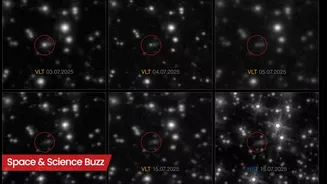
The recent findings illuminate a compelling cosmic puzzle centered around a dead star. Scientists, while observing the celestial landscape, have encountered
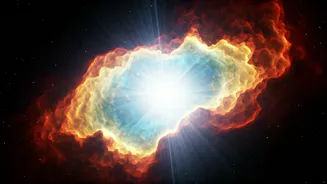
a massive nebula. This structure, which is a cloud of gas and dust, is strikingly prominent around a dead star. The primary intrigue lies in the nebula's sustained existence and the source of its energy. Traditionally, nebulae form during a star's final stages. They are illuminated by the star's radiant emissions or fueled by the remnants of stellar explosions. However, the energy source in this particular instance defies explanation, challenging the core principles of astrophysics. The unexpected power behind this nebula has left astronomers contemplating the possibility of previously unacknowledged stellar behaviors and cosmic interactions. This enigma is pushing the boundaries of current scientific knowledge, prompting a reevaluation of our fundamental comprehension of stars and the lifecycle of celestial objects.
The 'Mystery Engine' Uncovered
At the heart of this astronomical conundrum is the elusive 'mystery engine,' identified as the driving force behind the nebula's existence. While the specifics of this engine remain unknown, its impact is undeniable. Scientists are actively investigating what could possibly provide the immense power. This 'mystery engine' is vital to the nebula’s sustained brilliance and expansion. Some theories suggest a previously unrecorded form of stellar energy or, perhaps, a peculiar interaction between the dead star and its surroundings. The nature of this engine poses a substantial challenge to the standard models of stellar evolution. This discovery sparks excitement and demands a closer look into the fundamental processes that govern the lifecycle of stars, prompting scientists to explore uncharted territories in the vastness of space. The mystery engine could hold the keys to better understand the final stages of stars.
Challenging Established Theories
This remarkable discovery challenges long-standing scientific beliefs regarding stellar phenomena. The existence of a powered nebula surrounding a dead star contradicts conventional wisdom. Established astrophysics, which predicts a passive and fading process for dead stars, must be reevaluated. This means scientists must consider new factors that may affect the lifespan and impact of dead stars. The observed behavior, thus, necessitates a thorough reevaluation of prevalent scientific theories. This situation presents a pivotal opportunity for scientific advancement. It encourages a shift towards a more comprehensive framework of stellar evolution. It prompts the scientific community to develop new models and methodologies to explain the observed anomalies. This discovery serves as a reminder that the universe holds endless mysteries.
Implications and Future Research
The implications of this discovery reach far beyond the initial observation. The 'mystery engine' could reshape our understanding of the universe. This finding is just a starting point for exploration and research. Scientists intend to undertake detailed examinations of the area surrounding the dead star. These examinations will include advanced astronomical techniques. They also plan to collect detailed data on the nebula's composition, energy output, and spatial distribution. Analyzing this information will assist in the identification of the 'mystery engine.' Furthermore, it will facilitate the construction of theoretical models to simulate and explain the observed behavior. These future investigations promise to yield more insights into the processes governing stellar evolution, potentially unlocking previously unseen aspects of the cosmos. The research provides a gateway to expanding our current understanding of the universe.