
Memory: A New Perspective
Historically, the prevailing scientific viewpoint has maintained a specific model concerning the processes of memory. The conventional understanding has been
that memories are primarily stored in a single, dedicated area of the brain, and that the process of recalling a memory is a straightforward act of accessing and retrieving this information. Nevertheless, the recent study has fundamentally questioned these tenets. Researchers discovered that memory is not confined to one region, but instead is a more dynamic process, distributed across multiple brain areas. Furthermore, the act of remembering is revealed to be far from a simple retrieval, but rather a reconstructive process, where memories are pieced together from different neuronal networks.
Brain's Dynamic Networks
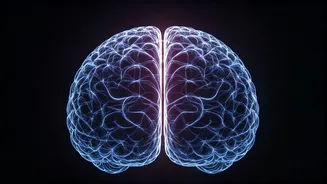
The study's most significant discovery lies in the understanding of how memories are stored and utilized. Rather than a solitary 'memory center,' the research indicates that numerous brain regions collaborate to form and access memories. This distributed network includes areas like the hippocampus (often linked to memory formation), the prefrontal cortex (involved in decision-making and working memory), and the amygdala (crucial for emotional responses tied to memories). When a memory is recalled, it is reconstructed through the interaction of these areas. Each time a memory is accessed, it can be slightly altered, adding a layer of complexity to the human experience. The implication here suggests that memories are not immutable records, but are instead, dynamic constructions open to modification.
Challenging Conventional Wisdom
The findings of this study directly contradict previous concepts and theories of memory. For instance, the traditional belief in a single memory location is questioned by the notion of a memory network. The implications extend beyond theoretical adjustments; they reshape how experts may approach the treatment of memory-related conditions. Conditions such as Alzheimer's disease and other forms of dementia are usually examined through the lens of localized damage to specific memory storage areas. The new perspective suggests that damage may be more multifaceted. Focusing on these interconnected networks opens avenues for more sophisticated intervention strategies that aim to protect and improve the memory network as a whole.
Implications and Future Research
This study's findings initiate exciting prospects for future research. Scientists are now eager to explore how these distributed memory networks function in various cognitive tasks and under different circumstances. Further research will aim to identify specific mechanisms for memory modification and retrieval. There is also a push to understand how this network functions differently in people with memory disorders. Another area of focus will be on learning how to enhance and protect memory, leading to new treatments for memory-related ailments. These research opportunities could open the door for a greater knowledge of the human mind, while potentially leading to life-changing innovations.
Impact on Memory Treatment
One of the most immediate practical consequences of this research could be in the realm of memory disorder treatment. Traditional approaches often prioritize directly targeting specific brain areas associated with memory. However, the study suggests that a broader approach that considers the entire network may yield better results. For instance, new therapies could concentrate on strengthening the connections between different brain regions and improve the overall efficiency of the memory network. These novel approaches could be crucial to slowing the progression of diseases like Alzheimer's and improving the quality of life for those afflicted.
Understanding Memory's Complexity
The complexity of the brain is revealed with the new study. The study emphasizes that the brain's operation is multifaceted, with various parts working together to create processes such as memory. The brain is not a collection of isolated compartments but a highly coordinated system. The continuous exchange and coordination between different brain areas make memory a reconstructive process, not a simple recall. This new perspective on memory calls for more sophisticated scientific investigation. This approach has the potential to dramatically alter how memory is perceived and treated and allows for innovative therapeutic interventions.