








Rocket's Arrival
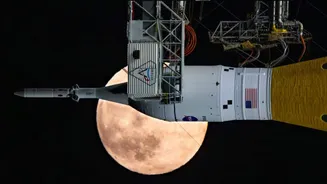
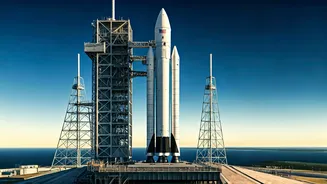
The Space Launch System (SLS), a rocket of immense scale, has made its way to the launchpad, signaling a pivotal moment in the Artemis program. This move
is more than just a logistical feat; it represents the culmination of years of dedicated work by NASA and its partners, bringing humanity closer to revisiting the lunar surface. The SLS, designed to carry astronauts and cargo beyond low Earth orbit, has undergone extensive testing and refinement to ensure its readiness for the challenges of space travel. The journey to the launchpad involved meticulous planning, transportation, and setup, ensuring the rocket's safety and integrity. The arrival at the launchpad marks a significant milestone, setting the stage for the next phase of the Artemis mission, and the launch sequence preparations.
Artemis II's Mission
The Artemis II mission is poised to be a landmark event, serving as the first crewed flight of the SLS. This mission will see astronauts journey around the Moon, testing critical systems and paving the way for future lunar landings. Artemis II is not just a precursor to a lunar landing; it's a critical mission focused on validating the spacecraft's life support, communications, and navigation systems within the deep space environment. The crew will undertake various tests and evaluations during their lunar flyby. This includes assessing the spacecraft's ability to withstand the harsh conditions of space and ensuring the safety of the crew. This mission underscores the commitment to safety, technological advancement, and the vision to extend human presence in space.
Preparing for Launch
With the rocket now in place, the focus shifts to launch preparations. This involves a complex series of tests, checks, and simulations to ensure everything is operating correctly. Engineers and technicians will work diligently to meticulously inspect the rocket's systems, from the engines to the life support equipment, validating every aspect. Simultaneously, the ground crew will prepare for launch by fueling the rocket with propellants, conducting communication checks with mission control, and running through simulations to prepare for different launch scenarios. These preparations are essential for mitigating risks and ensuring the success of the Artemis II mission. These steps collectively minimize any possible errors or complications, thereby making certain that the mission goes as planned and the crew stays safe. This careful approach also maximizes the chances of a successful lunar mission.
Looking Ahead
The Artemis program holds tremendous promise for the future of space exploration. The data and experience gained from the Artemis II mission will inform and shape the subsequent missions, laying the foundation for sustained lunar exploration and eventually, crewed missions to Mars. The Artemis program isn't just about reaching the Moon; it's about establishing a sustainable presence in space. The goal is to develop the technology and expertise required to send humans farther than ever before. This includes the development of lunar surface habitats, advanced life support systems, and the ability to utilize resources found on the Moon itself. The Artemis program inspires innovation and collaboration, pushing the boundaries of what is possible in space exploration.