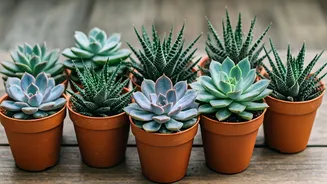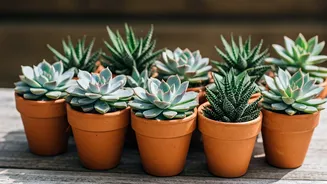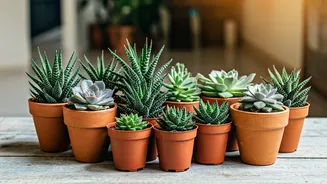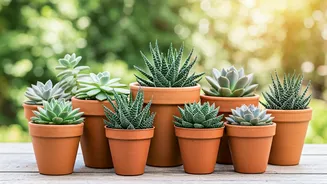



Easy Succulents: Overview
Succulents have become increasingly popular because of their resilience and charm. These plants store water in their leaves, stems, or roots, enabling
them to thrive in environments where other plants struggle. Their adaptability makes them ideal for both beginners and experienced plant enthusiasts. Succulents come in a diverse range of shapes, sizes, and colors, providing many opportunities for design and creativity. Understanding their basic needs will help to keep these plants alive. They generally require bright, indirect light, well-draining soil, and infrequent watering. Overwatering is one of the most common issues that can lead to root rot. Succulents are excellent for indoor settings and can also be used to enhance outdoor areas. Their ability to flourish in a range of conditions means you can easily customize their placement. By knowing the right species and their particular needs, you can easily grow a collection that fits any living space, adding natural beauty and personality.
Aloe Vera
Aloe vera is a versatile succulent well-known for its medicinal properties. The gel found inside the leaves is often used to soothe burns and skin irritations. This plant is easy to maintain, preferring bright, indirect light and infrequent watering. Aloe vera thrives when the soil dries out completely between waterings. Regular watering can lead to root rot. As the plant matures, it may produce offsets, also known as pups, that can be removed and repotted to create new plants. Aloe vera's adaptability makes it a practical addition to any house. Aloe vera is attractive and useful, making it an excellent option for both novice and experienced plant parents. Its capacity to survive in various conditions and its health benefits add to its appeal. This succulent not only enhances indoor decor but also provides useful resources for minor injuries and skin care. The ease of care and the various practical uses of Aloe Vera have made it a popular household plant.
Echeveria Elegance
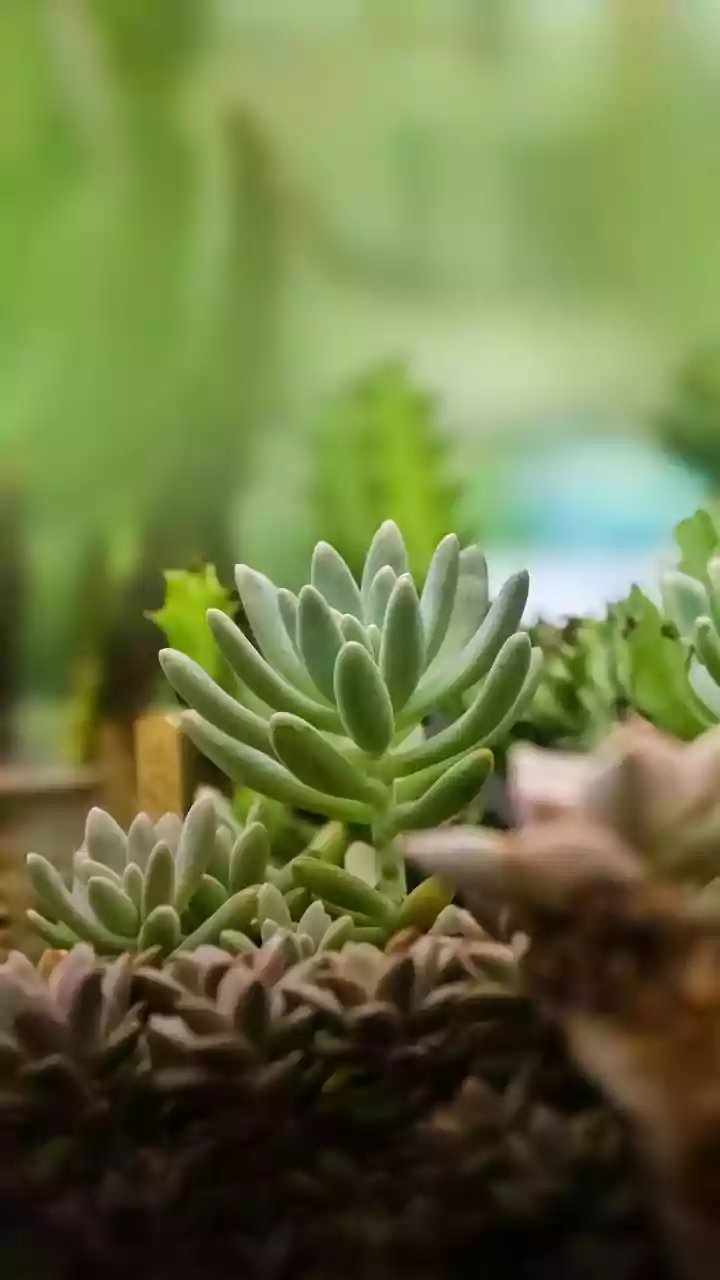
Echeveria Elegance is a popular succulent because of its rosette shape and attractive foliage. These plants are known for their symmetrical form and the beautiful colors of their leaves, which range from green to pink depending on sun exposure. Echeverias require bright light to maintain their vibrant colors. Place them in a sunny window or under grow lights to ensure they receive enough light. Water sparingly, only when the soil is completely dry. Overwatering is a frequent issue, leading to root rot. Echeverias do well in well-draining soil mixes, such as those made for cacti and succulents. Propagation is easily done through leaf cuttings. Just let the cutting callous over for a few days before planting it in soil. These succulents look great in pots and can be easily moved to different spaces. Their aesthetic qualities make them popular for home decor, enhancing the aesthetic appeal of any room. Their low-maintenance needs make them an ideal choice for both novice and experienced plant owners who seek effortless elegance.
Snake Plant
Sansevieria, or the Snake Plant, is renowned for its remarkable resilience and air-purifying qualities. These plants come in different varieties, including those with variegated edges or distinctive leaf patterns. Snake plants are known for their tolerance of low-light environments, making them suitable for offices and rooms with little natural light. They thrive on infrequent watering, and letting the soil dry out completely between waterings is important. Overwatering is the biggest threat to these plants. Place them in a well-draining potting mix to avoid water retention and promote root health. The Snake Plant is easy to propagate, by dividing the plant or by leaf cuttings. These plants are perfect for beginners because of their robustness and tolerance. They not only add a touch of greenery to your home but also help improve the air quality. Their unique shape and minimal care requirements ensure they continue to be a popular choice for house plants.
Jade Plant
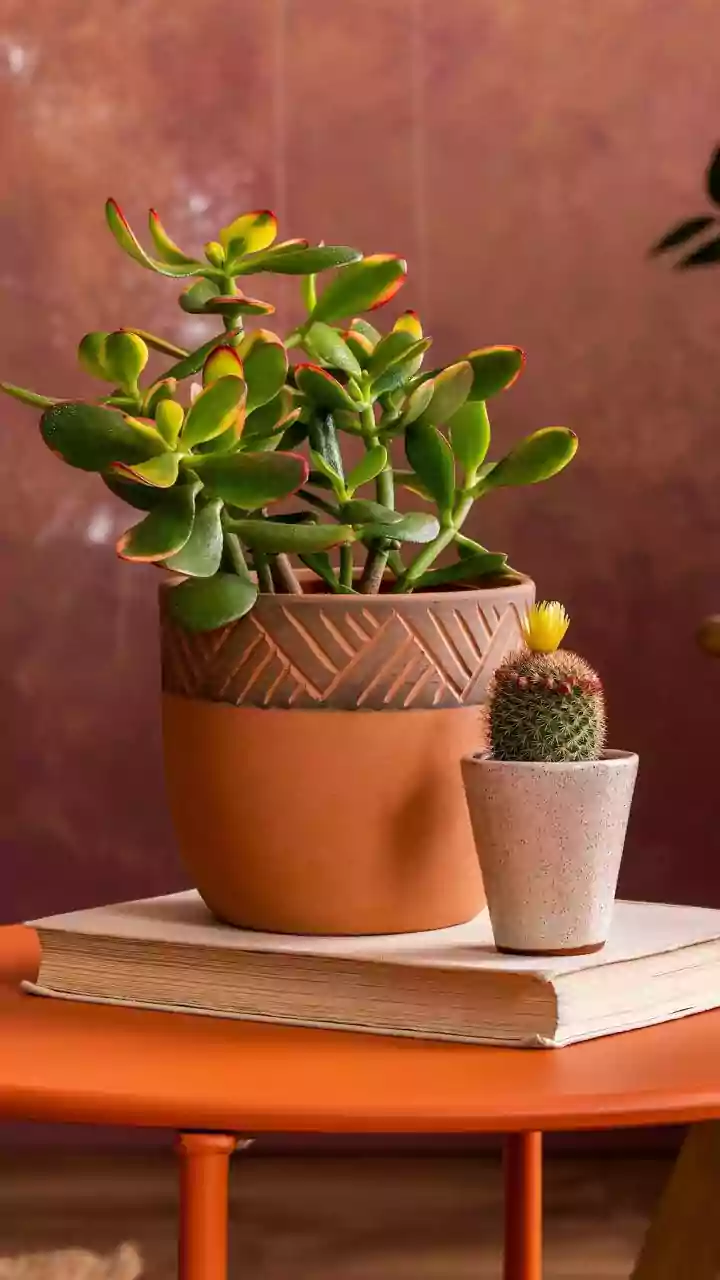
The Jade Plant, or Crassula ovata, is a succulent often associated with prosperity and good luck. Jade plants have thick, oval-shaped leaves and woody stems, resembling small trees. They are slow-growing and can live for decades if properly cared for. These plants require bright light, so it's best to place them in a south-facing window. Water when the top inch of the soil feels dry. Jade plants are vulnerable to root rot if overwatered, so proper drainage is crucial. Prune them regularly to maintain their shape and encourage branching. Jade plants can be propagated easily from stem or leaf cuttings. Allow cuttings to callous over before planting them in well-draining soil. Their unique characteristics and symbolism make them a favorite for home decorators. The Jade Plant is not only attractive but also needs little upkeep, which makes it a great choice for beginner gardeners. The long life span and symbolism associated with the plant add an element of enduring beauty and good fortune to any living space.
Sedum Varieties
Sedum is a large genus of succulents that comes in various forms and sizes, from low-growing ground covers to taller, upright varieties. Sedums are well-known for their star-shaped flowers that appear in the summer and fall. They require full sun to thrive and produce the most vibrant colors. Water sedums thoroughly but allow the soil to dry out between waterings. Sedums are very adaptable and can be used in containers, rock gardens, or borders. They are well suited to various planting environments. They are easy to propagate from stem cuttings or by division, which allows for effortless expansion of your collection. The ease of care and adaptability of Sedum make it a great option for gardens and house plants. Whether you like the low-growing carpet varieties or the bigger varieties, Sedum offers a range of aesthetic options, bringing texture and interest to any space. They are very reliable and add an element of low-maintenance beauty.
Hens and Chicks
Hens and Chicks, also known as Sempervivum, are a beautiful succulent with tight rosettes that produce smaller offsets, called chicks, around the main plant, the hen. These plants are very adaptable, thriving in full sun and well-draining soil. They are exceptionally cold-hardy and can withstand temperatures. Watering is minimal, allowing the soil to dry between waterings. Hens and Chicks propagate by producing new chicks, which can be detached and planted to start new plants. They bring an appealing geometric shape and texture to any setting. Their capacity to withstand tough weather conditions and their low maintenance makes them a favorite for both indoor and outdoor gardening. Hens and Chicks are popular because of their unusual shape and ability to thrive in a range of environments. Their resilience, simplicity of care, and visual beauty have helped them achieve widespread appeal.
Kalanchoe
Kalanchoe is a genus of succulents known for their vibrant, long-lasting flowers. They are popular for their showy blooms and simple care. Kalanchoes come in a range of colors and bloom during the winter and early spring. These plants need bright, indirect sunlight to thrive. Water when the soil is dry to the touch, and allow good drainage. Overwatering can lead to root rot. They can be propagated from leaf cuttings or by detaching offsets that appear around the plant. Kalanchoes' striking flowers and ease of care make them appealing additions to any home. Kalanchoes add beauty to any room. They are very easy to maintain and offer bright colors during the darker months. Their durability and ease of care make them a popular choice for beginner and seasoned plant keepers. They add a bright touch to indoor decorations due to their distinctive blooms.
String of Pearls
The String of Pearls, or Senecio rowleyanus, is a trailing succulent notable for its unique appearance. Its round, pearl-like leaves hang in long strands. This succulent does best in bright, indirect light, and it's important to allow the soil to dry completely between waterings. Overwatering can cause the pearls to rot. It does very well in hanging baskets or containers where the strands can cascade. This plant is easy to propagate by taking stem cuttings and laying them on well-draining soil. The String of Pearls is an interesting, low-maintenance succulent that adds a unique aesthetic to any room. Their simplicity and eye-catching appearance have made them popular among plant enthusiasts. Their delicate, trailing nature makes them a distinctive decorative element, bringing a modern and elegant touch to home decor. They are adaptable and offer effortless charm to any setting.
Haworthia
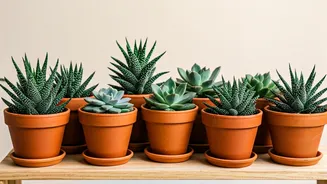
Haworthia is a genus of succulents that are relatively small and slow-growing. They come in a variety of patterns and textures. Haworthias prefer bright, indirect light and well-draining soil. Water them sparingly, allowing the soil to dry completely between waterings. These plants are well-suited to indoor settings and can be potted in small containers. Haworthias can be propagated from offsets or leaf cuttings. They are great for beginners, requiring minimal care and offering unique beauty. Haworthias add texture and interest to any succulent collection. Their distinctive look and minimal maintenance needs have made them popular for home decor. These beautiful succulents are visually appealing, need little care, and can bring a touch of elegance to any living space. Their compact size makes them ideal for smaller homes.