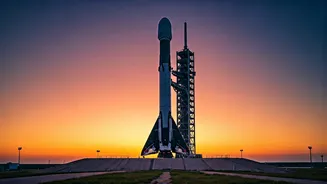




Orbital AI Hubs
Elon Musk harbors a visionary objective to construct artificial intelligence data centers in the vast expanse of space. This ambitious endeavor is intricately
linked to a proposed merger between his aerospace company, SpaceX, and his artificial intelligence research firm, xAI. The core idea revolves around leveraging the unique environment of orbit to house and operate powerful AI systems, moving beyond the limitations of terrestrial infrastructure. Such a move could offer advantages in terms of cooling, energy harvesting, and potentially, access to uninterrupted communication channels. The strategic placement of these data centers could also pave the way for new applications and significantly enhance the capabilities of AI, enabling it to process information and perform complex tasks at an unprecedented scale and speed, unhindered by atmospheric conditions or geographical constraints. This forward-thinking concept positions space as the next frontier for advanced computing.
SpaceX & xAI Synergy
The envisioned consolidation of SpaceX's launch capabilities with xAI's cutting-edge artificial intelligence expertise forms the bedrock of this ambitious space-based data center project. SpaceX, renowned for its prowess in rocket development and satellite deployment, would provide the essential logistical framework to transport and maintain sophisticated AI hardware in orbit. This includes the capability to deliver massive payloads and ensure their reliable operation far above Earth's surface. Concurrently, xAI, under Musk's guidance, is at the forefront of developing advanced AI models and algorithms. By integrating these two entities, the plan seeks to create a self-sufficient ecosystem where AI can not only be housed but also continuously developed and optimized within a space environment. This fusion of launch technology and AI innovation is critical to realizing the complex requirements of establishing and operating high-performance computing facilities in the challenging conditions of space.
Future of Computing
The implications of establishing AI data centers in space are profound, potentially heralding a new era for computational power and data management. Orbiting data centers could offer unparalleled benefits, such as extreme thermal management solutions due to the vacuum of space, and the potential for harnessing solar energy with greater efficiency. This would allow AI systems to operate at peak performance without the thermal throttling often experienced by ground-based servers. Furthermore, such a decentralized global infrastructure could enhance data resilience and accessibility, mitigating risks associated with single-point failures on Earth. The ability to process vast datasets in real-time, free from terrestrial bandwidth limitations, could accelerate breakthroughs in scientific research, autonomous systems, and global communication networks, fundamentally reshaping how we interact with and utilize artificial intelligence.