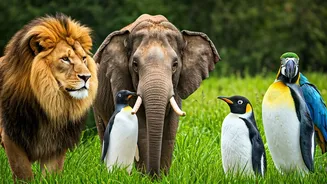








Understanding Animal Personalities
Animal personalities, much like human personalities, refer to consistent behavioral traits that individuals exhibit across different situations. These
traits can vary greatly among members of the same species and can include characteristics like boldness, shyness, aggressiveness, and sociability. Such differences aren't merely random variations; they often reflect underlying genetic or environmental influences that shape an animal's responses to challenges and opportunities. Researchers are increasingly recognizing the importance of studying these personality traits. This deeper understanding aids in creating more effective conservation strategies. These strategies may involve everything from breeding programs to habitat management and are tailored to each species' specific behavioral dynamics. Considering these individual differences offers a more holistic approach to wildlife conservation, ensuring the efforts are aligned with the complex realities of animal behavior.
Impact on Conservation
Animal personalities have significant implications for conservation initiatives in multiple ways. For instance, in breeding programs, understanding personality can boost the chances of success. By carefully matching individuals with compatible traits, such as pairing more sociable animals, breeding programs can enhance group dynamics and overall well-being. This can lead to higher reproduction rates and healthier offspring. In habitat management, considering personalities becomes essential. For example, some animals are naturally more exploratory and less shy. These animals may be better suited for new environments. This understanding helps in reintroduction efforts, as animals with adaptable personalities might be more likely to thrive in unfamiliar surroundings. Conservationists tailor strategies based on the predominant personality traits observed within a population, maximizing the effectiveness of their efforts.
Adaptive Traits Influence Survival
The relationship between animal personalities and their ability to adapt to a changing environment is significant. Bold animals, for instance, may be more inclined to explore novel habitats or try new food sources. This can provide them with an advantage during environmental shifts. In contrast, shyer animals might be better equipped to evade predators, especially in risky environments. The blend of various personality traits in a population ensures that there's resilience and adaptability. If the environment changes, some individuals will have the traits necessary to survive. This diversity, therefore, safeguards the population against environmental stresses like climate change or habitat destruction. Researchers focus on how these traits assist survival and reproduction, contributing to the long-term well-being of species.
Effective Population Management
The insights gained from studying animal personalities are vital for effective population management. Conservationists use these insights to assess and predict how a population will respond to changes. For instance, they may predict the success of a reintroduction program based on the personality profiles of the individuals being released. Analyzing personalities also enables more precise monitoring of population health and behavior. This leads to informed decisions about resource allocation and habitat maintenance. Conservation efforts may evolve by considering the personalities of individual animals. Population management strategies can be improved to achieve desired outcomes more efficiently. This approach enables them to better protect species threatened by extinction.
Future Conservation Strategies
Looking forward, the integration of animal personality research into conservation practices is bound to increase. Future studies will delve into the complexities of personality traits and their interplay with genetics, environment, and behavior. These studies could potentially develop methods to analyze and interpret personality traits across diverse species. Technological advancements, such as the use of tracking devices and advanced data analysis, will offer opportunities to collect and evaluate detailed data on animal behavior in natural settings. Ultimately, by enhancing our understanding of animal personalities, conservation efforts will become even more targeted and capable, leading to successful species protection. This knowledge will assist conservationists in creating a positive future for wildlife.