





Data Consumption Skyrockets
In the year 2025, the average Indian mobile user was consuming a staggering amount of data, reaching over 31 GB per month. This marks a substantial increase,
reflecting a consistent compound annual growth rate of 18% over the preceding five years, as detailed in the 13th annual Mobile Broadband Index (MBiT) released by Nokia on March 31, 2026. This dramatic rise in data usage isn't accidental; it's largely propelled by the increasing demand for data-intensive applications and services. Users are increasingly engaging with cutting-edge technologies that require significant bandwidth, such as advanced Artificial Intelligence applications that process vast amounts of information, high-definition 4K video streaming for unparalleled visual experiences, and immersive cloud gaming platforms that deliver console-quality entertainment on mobile devices. These data-hungry use cases are fundamentally reshaping how Indians interact with their mobile devices and the internet.
5G Dominance Grows
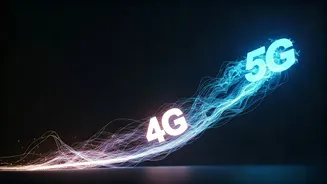
The transition to 5G technology has been a pivotal factor in India's data consumption boom. In 2025, monthly 5G data traffic experienced an impressive year-on-year growth of 70%, reaching a colossal 12.9 exabytes. This surge means that 5G alone accounted for nearly 47% of all mobile broadband traffic, underscoring its rapid adoption and dominance. The overall monthly data traffic across all mobile networks surpassed 27 exabytes in the same year. This widespread use of 5G was facilitated by the continuous expansion of 5G network coverage across the nation and the increasing availability of affordable 5G-compatible smartphones. These advancements have made high-speed mobile internet more accessible than ever before to a larger segment of the population, further fueling the demand for data.
Urban and Rural Uptake
The adoption of 5G technology and the subsequent surge in data consumption are not confined to major urban centers. While metropolitan areas continue to lead in 5G penetration, with 5G traffic constituting 58% of the total mobile data in these regions, the growth trajectory has significantly accelerated across other categories of circles as well, including Category A, B, and C. This widespread adoption indicates that the benefits of faster mobile internet are reaching a broader demographic. The report also highlighted the robust ecosystem of devices supporting this evolution. By 2025, the number of active 4G devices had reached 892 million, with a remarkable over 383 million of these already being 5G-capable. Furthermore, the smartphone market itself is leaning heavily towards 5G, with over 90% of smartphones shipped during 2025 featuring 5G capabilities, ensuring a strong foundation for future data growth.
Future Projections
Looking ahead, the trajectory of 5G adoption in India suggests a continued and even more rapid expansion. Projections from the Nokia MBiT report indicate that India's 5G subscriber base is poised to exceed a remarkable 1 billion by the year 2031. This positions India as a global leader in 5G, currently holding the world's second-largest 5G subscriber base and ranking second in terms of 5G data consumption. This sustained growth points to a mobile broadband landscape that is continually evolving, driven by technological advancements and shifting user behaviors. As networks become more sophisticated to handle these new usage patterns and increasingly intelligent services, organizations like Nokia are committed to supporting telecommunication providers in building robust, high-performance, and future-ready connectivity infrastructures. This collaborative approach is essential for navigating the next phase of digital evolution in India.