
FTA's Transformative Scope
The India-EU Free Trade Agreement is more than just a trade deal; it's a comprehensive framework designed to boost collaboration and innovation in several
key sectors, with a strong focus on AI and semiconductor technologies. The agreement is anticipated to reduce trade barriers, leading to increased access to markets and fostering a more competitive business environment. This will encourage investment flows, technological exchanges, and the creation of joint ventures. Specifically, the FTA addresses critical areas such as intellectual property rights, data protection, and digital trade, which are pivotal for fostering growth in AI and semiconductor sectors. The agreement's impact will be felt across various facets, including the promotion of research and development, skills enhancement, and the creation of a conducive ecosystem for both start-ups and established companies. The overall goal is to establish a robust and mutually beneficial partnership that drives technological advancements and stimulates economic development. The FTA creates a path for Indian companies to enter the EU market more easily, while the EU firms can enjoy better access to the Indian market. These changes will facilitate the exchange of knowledge, expertise, and resources, thereby accelerating innovation. The impact will extend beyond pure economics, as it is expected to create opportunities for cultural and social exchange, strengthening relationships between both entities.
AI Sector: Innovation Catalyst
For the artificial intelligence sector, the India-EU FTA promises to act as a significant catalyst for innovation and growth. The agreement is likely to foster joint projects and research initiatives, resulting in advancements in key AI areas like machine learning, deep learning, and natural language processing. By reducing trade restrictions, companies will gain access to a larger pool of data, resources, and talent, which in turn will improve the development and deployment of cutting-edge AI technologies. This increased accessibility to resources will also stimulate the development of new AI applications across various domains, including healthcare, finance, and manufacturing. Furthermore, the FTA addresses issues related to data protection and ethical considerations in AI. This would pave the way for the adoption of responsible AI practices. The creation of common standards for data privacy and ethical guidelines can help establish trust and facilitate cross-border collaborations. It is expected that the FTA will also encourage investment in AI-related infrastructure, such as cloud computing and high-performance computing, which are essential for supporting the complex processing demands of AI applications. The aim is to create an ecosystem that supports not only technological progress but also the development of a skilled workforce. The potential for the establishment of AI-focused centers of excellence and training programs across India and the EU will be supported by these developments.
Semiconductor Boost: Supply Chains
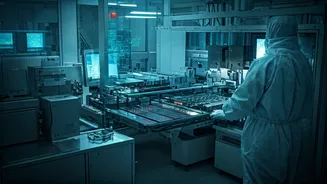
In the semiconductor industry, the India-EU FTA is expected to be a game-changer, addressing critical aspects of supply chains, manufacturing, and technology transfer. The agreement aims to reduce tariffs and non-tariff barriers, making it easier for companies to source materials and components needed for semiconductor manufacturing. By reducing trade costs, the FTA can enhance the competitiveness of both Indian and EU semiconductor manufacturers. This will facilitate greater investment in manufacturing facilities, research and development, and infrastructure. In the context of global chip shortages, the FTA can contribute to building a more resilient and diversified supply chain, reducing reliance on single sources. Furthermore, the FTA can provide opportunities for collaborative projects, including joint ventures to set up semiconductor fabrication plants, assembly, testing, and packaging facilities in both India and the EU. This will foster technology transfer, and knowledge sharing. Standardizing regulations and promoting intellectual property protection within the FTA is essential for facilitating collaboration and investment in the semiconductor space. The focus of the FTA will also be on skill development programs, ensuring that the industry has access to a skilled workforce capable of operating in the evolving semiconductor landscape. This is meant to create an ecosystem that supports the complete semiconductor value chain from design and manufacturing to packaging and testing, thereby enhancing self-reliance and innovation.
Challenges and Opportunities
Despite its potential advantages, the India-EU FTA poses some challenges and opportunities for both India and the EU. One of the main challenges is bridging the gap between existing regulatory frameworks, standards, and practices in both regions. Harmonization of these will need careful attention to ensure seamless trade and collaboration. The FTA needs to address the protection of intellectual property rights, data security, and cyber-security concerns, especially in AI and semiconductors. These are very critical for maintaining trust and fostering innovation. There could also be issues related to labor standards, environmental regulations, and social impacts. Both sides must work together to find a balance between fostering economic growth and addressing these concerns. On the other hand, the FTA offers significant opportunities. It will enhance competitiveness, open new markets, and drive technological innovation. It also has the potential to boost economic growth, create jobs, and foster cultural exchange. Collaboration in research and development and the promotion of start-ups and SMEs are also very important opportunities that can be further enhanced. This will support the growth of a skilled workforce and ensure that both India and the EU remain at the forefront of global technological innovation. A forward-looking approach to these challenges can allow both parties to fully benefit from the India-EU FTA.