



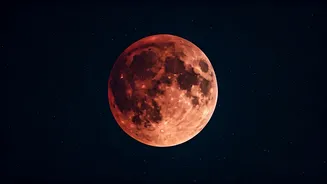
What is a Blood Moon?
A total lunar eclipse, often called a 'Blood Moon,' is a stunning astronomical event occurring when the Sun, Earth, and Moon align perfectly, with our
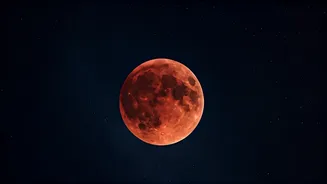
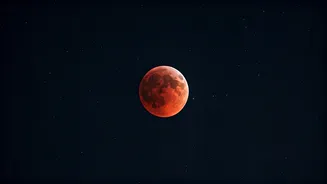
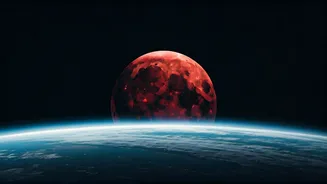
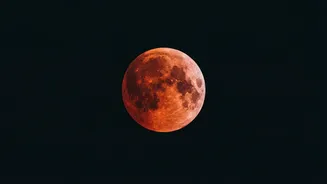
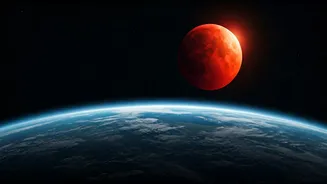
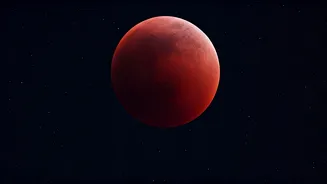
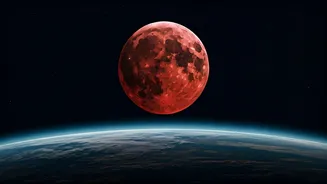
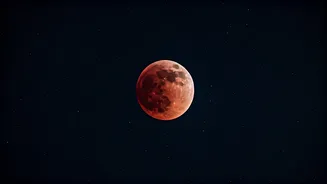
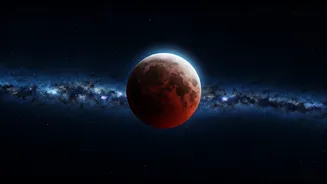
planet positioned directly between the other two. During this alignment, Earth casts its shadow, specifically the darkest part known as the umbra, onto the lunar surface. Initially, the Moon passes through Earth's lighter shadow, the penumbra, causing a slight dimming that's often imperceptible. The real magic happens when the Moon enters the umbra; sunlight is completely obstructed, save for the rays that manage to filter through Earth's atmosphere. This atmospheric filtering is key to the Moon's transformation, as it scatters shorter, blue wavelengths of light more effectively, allowing the longer, red wavelengths to pass through and illuminate the Moon with a distinct reddish or coppery glow. This captivating phenomenon, driven by orbital mechanics, is observable from any location where the Moon is visible above the horizon at the time of the eclipse.
Visibility and Timing
The total lunar eclipse on March 3, 2026, promises to be a significant event, as it is slated to be the sole total lunar eclipse of the year, with the next one not anticipated until late 2028. This celestial occurrence will be observable across a vast expanse of the globe. Specifically, residents in large portions of Asia, Australia, North America, and parts of South America will have prime viewing opportunities. The exact timing of the Moon's journey into Earth's shadow and the peak totality phase will vary depending on an observer's geographical location, meaning local times will differ. NASA's advanced eclipse visualization tools and detailed maps are invaluable resources for enthusiasts, offering precise insights into the path of Earth's shadow and the regions where the eclipse's full grandeur can be appreciated. These visual aids assist viewers in planning their observation sessions, marking when to look up as the Moon transitions from partial eclipse phases into complete totality and then back again.
The Moon's Crimson Hue
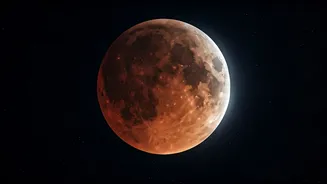
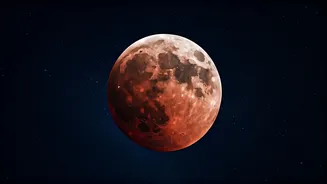
The mesmerizing red or coppery appearance of the Moon during a total lunar eclipse is a direct consequence of Earth's atmosphere acting like a lens. As sunlight embarks on its journey towards the Moon, it must traverse our planet's atmospheric layers. During this passage, the atmosphere preferentially scatters the shorter, bluer wavelengths of light. Simultaneously, the longer, redder wavelengths are refracted, or bent, towards the Moon. Consequently, the light that ultimately reaches the lunar surface and is reflected back to us is predominantly red. This optical effect is identical to the phenomenon responsible for the vibrant reds seen during sunsets and sunrises. When the Sun is low on the horizon, its light travels through a greater thickness of atmosphere, which intensifies the scattering of blue light and allows the red hues to dominate the visual spectacle, painting the sky with fiery colors.
Viewing the Eclipse
Unlike the stringent safety precautions required for observing solar eclipses, total lunar eclipses are remarkably accessible and can be viewed safely with the naked eye. No specialized optical equipment is necessary to experience the full spectacle, from the initial entry into Earth's shadow to the peak of totality and the subsequent exit. However, for those seeking a more detailed view, binoculars or telescopes can significantly enhance the experience by revealing surface features on the Moon, such as craters and maria, with greater clarity. To maximize your viewing pleasure, it's advisable to select a location free from excessive light pollution, ensuring a clear panorama of the night sky. Familiarizing yourself with local moonrise and eclipse timings is crucial for planning your observation. Arriving at your chosen spot 30 to 60 minutes prior to the commencement of totality allows ample time to witness the gradual encroachment of Earth's shadow across the lunar disc, adding to the awe-inspiring nature of the event.