




Future Launch Frequency
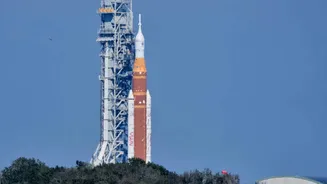
Elon Musk, the driving force behind SpaceX, has articulated a groundbreaking aspiration for the Starship program: achieving an astonishing launch rate
of once every hour within the next three years. This forward-looking statement emerged during a recent discourse on the X platform, where the escalating launch schedule for 2026 was being examined. Currently, the company's proven Falcon 9 rocket is already demonstrating a steadily increasing operational pace, with seven launches planned before the close of February from its California and Florida facilities. Musk, however, suggests this impressive cadence will seem remarkably modest when contrasted with the potential of Starship. He directly links this ambitious projection to the burgeoning demand for satellite constellation deployment and the long-term development of vital space-based infrastructure. These remarks follow a significant corporate maneuver, the merger of SpaceX and xAI, a development Musk highlighted as being strongly influenced by the demand for launch services driving Starship's advancement.
Revolutionizing Space Access
The current operational tempo of SpaceX is already outpacing many in the industry, with an array of Falcon 9 missions originating from both US coasts, including crucial flights from Cape Canaveral and Vandenberg. Seven launches are slated for completion before the end of the current month, underscoring a growing momentum. Rather than focusing on these immediate figures, Musk directs attention towards the future, indicating that operations will become "really nutty" once Starship achieves its target of hourly launches. This concise, yet impactful, statement underscores the paramount importance of launch frequency as a core strategic pillar for SpaceX. The intention behind Starship is clearly to fundamentally alter the rhythm and scale of space access, moving far beyond current capabilities and enabling a new era of space exploration and commercialization.
Starship's Payload Power
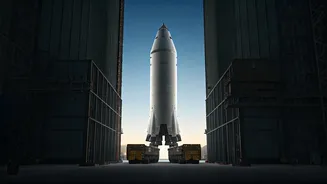
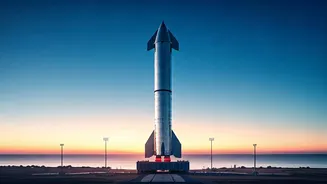
Starship, the ambitious vehicle currently under development by SpaceX, is engineered with a colossal payload capacity, capable of transporting up to 200 tonnes per mission. Musk has posited that with the envisioned hourly launch rate, Starship could facilitate the transfer of millions of tonnes into orbit annually. Such a vast capacity would be instrumental in supporting the deployment of expansive satellite networks, potentially including future space-based data centers. Following the strategic integration of SpaceX and xAI, Musk emphasized that the immense demand for placing a multitude of satellites into orbit is a primary catalyst for accelerating Starship's development. He characterized satellite launches as a critical "forcing function" for enhancing the reliability of the system and significantly reducing the turnaround time between missions. The entire concept hinges on achieving unprecedented scale, necessitating more frequent launches, heavier payloads, and drastically shorter intervals between flights. While the system is still undergoing rigorous testing and the Falcon 9 continues to serve as the company's primary workhorse, Starship represents a paradigm shift aimed at transforming the entire landscape of space transportation.