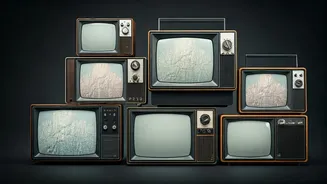









Early Television Innovations
The early days of television were marked by a flurry of innovation and experimentation. One key aspect was the rapid development of different broadcasting
standards, such as those used by the BBC. These standards influenced the quality and accessibility of early TV programming. Another pivotal technological leap involved the development of early television cameras and the transition from mechanical to electronic scanning. The rise of television also saw the convergence of various artistic media. Television drew on radio's structure and content, while simultaneously incorporating elements from live theater and cinema. This fusion led to new genres of programming and transformed storytelling on the small screen. These early years shaped the fundamental concepts of broadcasting, paving the way for the television systems we know today.
Hidden Gems of TV
Many television programs are rich with hidden details, which, if noticed, offer a deeper appreciation of the creative processes behind them. The use of certain props and costumes, for instance, often serves subtle narrative purposes, acting as visual metaphors that enhance a program's meaning. The production techniques, such as camera angles or editing rhythms, are also significant. For example, a director might use specific camera movements to build tension or communicate a character's emotional state. Furthermore, TV programs frequently contain references to other works of art, history, or culture, in the form of literary allusions or parodies. Such details serve to create layers of meaning that can be deciphered by discerning viewers. The details create opportunities for audience engagement, rewarding careful observation with a richer, more complex viewing experience.
TV's Cultural Impact
Television has undeniably become a key cultural force, reshaping the way we interact with the world around us. Its rise has influenced social norms, cultural trends, and even the development of language. Television is a powerful tool for broadcasting ideas, shaping societal narratives, and influencing public opinion. Television reflects and shapes societal values, with its characters and stories either supporting existing beliefs or promoting new ones. Television programming has also impacted consumer behavior and advertising methods, with commercials changing the way businesses reach their audiences. The influence of television is seen in its ability to start conversations, spark social movements, and document history as it happens. Ultimately, the long-lasting impact of television rests on its pervasive presence and its continuous influence on society.
Behind-the-Scenes Stories
The making of television programs often contains captivating stories and unexpected twists. A television show's success can depend upon the interplay of many creative minds. Conflicts and cooperation on set, personal anecdotes of the actors, and last-minute changes of scripts are common features in TV's production. In many cases, these experiences shape a program's final product and can become iconic stories in themselves. Many shows have unique origins. It could be inspired by a real-life event, based on a book, or even born from a studio executive's unique idea. A memorable program's success often involves a series of critical choices by the producers, writers, and directors. These choices include casting, location scouting, and story editing. These behind-the-scenes stories provide an intimate view into the creative process and highlight the work, struggles, and triumphs that occur during the making of television.