




Founding Vision Fractured
The stage is set for a landmark legal battle in a federal courtroom, marking one of the most significant legal contests in the burgeoning field of artificial
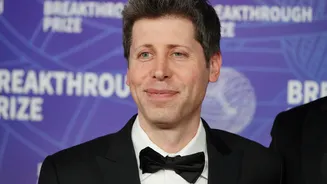
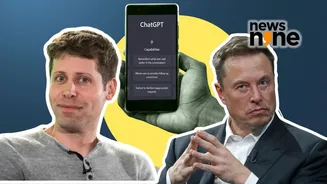
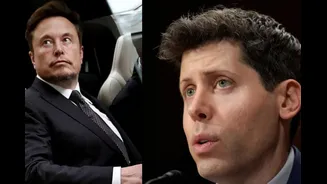
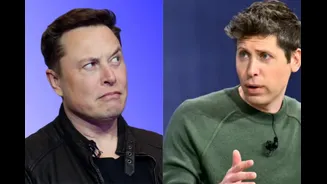
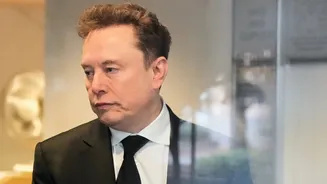
intelligence. At its heart lies a dispute initiated by Elon Musk, the renowned entrepreneur leading Tesla, SpaceX, and xAI, against Sam Altman, the CEO of OpenAI, alongside OpenAI president Greg Brockman and Microsoft. Musk contends that the organization's fundamental founding principles have been fundamentally compromised. The trial, commencing with jury selection on April 27, 2026, is slated to span four weeks and possesses the potential to dramatically influence the future of a highly valuable AI enterprise and the wider technological landscape it operates within. The genesis of this conflict traces back to 2015 when Musk and Altman, alongside a cadre of other innovators, established OpenAI with a clear, shared objective: to pioneer artificial intelligence with a steadfast commitment to safety and for the overarching benefit of humanity, operating under a nonprofit structure. Musk provided substantial financial backing in the initial phases and participated as a board member. However, by 2018, his involvement ceased following what accounts suggest was an internal power struggle. Musk sought greater operational control, a proposition that met with disagreement from other co-founders, leading to his departure. Since then, he has had no direct involvement with OpenAI.
Claims of Betrayal
In 2023, Musk formally initiated legal proceedings, asserting that Altman, Brockman, and other associated parties had misled both him and the public by transitioning OpenAI away from its nonprofit status to operate a for-profit subsidiary. His core argument posits that this structural shift primarily served to enrich Altman, Brockman, and key investors, most notably Microsoft, which has infused billions of dollars into the company, thereby deviating significantly from the altruistic mission Musk maintains he was assured would be upheld. The legal case presented by Musk hinges on two principal claims that have progressed to trial: unjust enrichment and breach of charitable trust. It is noteworthy that of the original 26 claims filed in 2024, only these two remain, a result of either dismissals by the court or voluntary withdrawals by Musk's legal team aiming to simplify and focus the proceedings. Musk had pledged $1 billion to OpenAI's establishment in 2015. However, OpenAI counters that his actual contribution amounted to approximately $45 million before his departure in 2018. He asserts his support was predicated on the organization's commitment to remaining a nonprofit dedicated to humanity's welfare. The subsequent move towards a for-profit model, bolstered by investments from entities like Microsoft, generated considerable value, which Musk argues is entirely disconnected from the organization's original purpose. He is seeking damages exceeding $134 billion, stipulating that any awarded funds should be directed to OpenAI's nonprofit division rather than to him personally. Furthermore, he is requesting the court to remove Altman and Brockman from their leadership positions and to reinstate OpenAI as a nonprofit entity.
OpenAI's Defense
OpenAI has firmly refuted Musk's lawsuit, characterizing it as a "baseless and jealous bid to derail a competitor." Altman and his co-defendants present a markedly different narrative of the events. According to OpenAI's account, Musk himself had previously championed the concept of a for-profit model in the early stages of the organization's development and had even proposed integrating OpenAI into Tesla. They assert that his departure in 2018 was not a consequence of fundamental ideological differences but rather stemmed from his inability to secure exclusive control. Regarding the organizational restructuring, OpenAI contends that it was a critical business necessity. The argument is that without the capacity to attract commercial investment, the company would have been unable to maintain competitiveness in the intensely expensive race for artificial intelligence advancement. They emphasize that the nonprofit arm continues to hold a 26% stake in the for-profit entity and plays an ongoing role in guiding the organization's safety-focused mission. The trial is anticipated to feature testimony from some of the most influential figures in the global technology sector. Both Musk and Altman are expected to take the stand, alongside Microsoft CEO Satya Nadella and various current and former members of OpenAI's board and senior research staff. The roster of potential witnesses has been described as a veritable who's who of Silicon Valley, making the jury selection process an exceptionally intricate undertaking. A significantly larger pool of candidates than typically required for a civil case, approximately three times the usual number, was summoned during the selection phase, given the extraordinary public profiles of the individuals involved.
High Stakes for AI
The implications of this legal contest extend well beyond the personal animosity between two prominent figures. OpenAI is in the midst of preparations for a highly anticipated initial public offering (IPO). A ruling in favor of Musk could significantly disrupt these plans, potentially necessitating a complete structural overhaul and the removal of Altman and Brockman from their leadership roles. Currently, OpenAI and its for-profit arm are valued at over $300 billion in the private market. For Musk, securing a victory could grant his own AI venture, xAI—which he merged with SpaceX earlier in 2026—a substantial competitive edge by destabilizing its most formidable rival. Critics, however, have questioned the purely altruistic motivations behind his lawsuit, given this potential competitive advantage. Regardless of the final verdict, this four-week trial is almost certain to yield significant revelations through witness testimonies, text messages, and emails, shedding light on the formative years of one of the world's most influential AI companies and the personal and financial dynamics that shaped its evolution. Legal experts have also raised pertinent questions about the legal framework of the case itself. Some scholars specializing in nonprofit law express surprise that the judge permitted the breach of charitable trust claim to proceed, noting that such actions are typically initiated by state attorneys general, not by former donors or board members. Notably, the attorneys general of both California and Delaware reached a separate agreement with OpenAI in October 2025 that approved the restructuring under specific conditions. Furthermore, California's attorney general has opted not to join Musk's lawsuit, stating that the office does not perceive how his legal action serves the broader public interest. Legal analysts have also pointed out that the case is being adjudicated under trust law, a legal framework that some believe may not be optimally suited for evaluating the operations of a complex technology organization.