
Apollo's Legacy
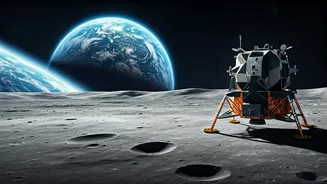
The Apollo program, a monumental achievement in human history, set the stage for space exploration. During the 1960s and 1970s, the Apollo missions witnessed
the United States' remarkable ability to send humans to the Moon. These missions, driven by Cold War competition and national pride, were characterized by rapid development and singular focus. However, Apollo's approach was also expensive and unsustainable. The technology of the time was rudimentary compared to today's standards, with limited computing power and less emphasis on reusability and long-term goals. While it provided invaluable experience, the Apollo program was primarily a sprint, not a marathon. It pushed the boundaries of what was thought possible, but it did not set the groundwork for continued lunar presence. The Apollo missions successfully demonstrated the ability to leave Earth and land on the moon, but it was not designed for permanent presence or the in-depth lunar study that is the current goal.
Artemis: A New Strategy
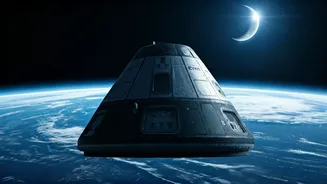
The Artemis program represents a paradigm shift in NASA's approach to space exploration. Unlike the Apollo program, Artemis is conceived as a sustained effort, a multi-stage approach designed to establish a permanent human presence on the Moon. This change is driven by technological advancements, and also by a conscious effort to establish international collaborations and promote commercial partnerships. Artemis is intended to take advantage of reusable technologies, advanced robotics, and more efficient methods of space travel. The first Artemis mission, uncrewed, served as a vital test. The goal of Artemis is not just to reach the Moon, but to learn how to live and work there sustainably, preparing for future missions to Mars. Artemis I was a crucial step in the long-term vision. This mission included testing all the essential systems that are to be used in future missions, like the Orion spacecraft and the Space Launch System rocket, and demonstrating their readiness for human missions.
Artemis II: The Journey Begins
Artemis II, slated for launch in 2026, marks the first crewed mission of the Artemis program. This mission will see astronauts journey around the Moon and back, serving as a critical test of the Orion spacecraft and the life-support systems required for lunar travel. This mission will not involve a landing, but instead, it is designed to evaluate all elements of the system in preparation for subsequent lunar landings. This crucial mission will provide invaluable data on crew health, spacecraft performance, and the overall reliability of the system. The successful execution of Artemis II is vital for establishing a foundation for the following Artemis missions, which will involve lunar landings and further exploration of the Moon's surface. The data gathered during the mission is essential for the further development of the spacecraft systems and to ensure the safety of astronauts for future missions.
Technological Advancements
The Artemis program leverages significant technological advancements that were not available during the Apollo era. The Orion spacecraft, built for human space travel, is a good example of this. It has a modern life-support system and enhanced navigation. The Space Launch System (SLS) rocket offers unprecedented launch capacity, capable of carrying both the Orion spacecraft and heavy payloads necessary for lunar missions. Reusable technologies are another crucial element. Unlike the single-use rockets of the Apollo program, the SLS is designed to be partially reusable, contributing to cost efficiency and long-term sustainability. Moreover, advances in robotics, artificial intelligence, and materials science are playing an increasingly crucial role in all the different aspects of space exploration. From autonomous systems to advanced spacesuits and habitats, Artemis relies heavily on cutting-edge developments, ensuring its success and sustainability. The ability to monitor crew health and overall mission performance with advanced technology is also an important advancement.
Global Collaboration
A notable distinction of the Artemis program is its focus on global collaboration. NASA is partnering with international space agencies and commercial companies to achieve its goals. The collaboration helps with resource-sharing and technological expertise. Agencies from Europe, Canada, and Japan are among the key partners in the program. This collaboration promotes the sharing of technological capabilities and financial resources, distributing the risk and burden of complex space missions. International partnerships also broaden the base of scientific expertise, bringing together diverse perspectives and innovative solutions. Moreover, the engagement of commercial entities encourages competition and stimulates innovation in the space industry. This approach promotes efficiency, fosters economic growth, and sets the stage for a more global and collaborative era in space exploration. These partnerships enable NASA to achieve more than it could accomplish alone and also helps to create a long-term, sustainable presence on the moon.
Mars: The Ultimate Goal
While the focus is on the Moon in the near term, the Artemis program serves as an important stepping stone toward the ultimate goal of human missions to Mars. The technologies and knowledge gained during the Artemis missions, including long-duration space travel, lunar habitat construction, and resource utilization, will be essential for the Martian exploration. The Moon serves as a testing ground for technologies and strategies, reducing the risks and costs associated with interplanetary travel. It allows us to simulate the challenges of a Mars mission, by testing systems and protocols in a relevant environment. The experiences of crewed lunar missions will provide key insights into human health, psychological effects, and mission management on long-duration space flights. Success in the Artemis program will bring humanity closer to a realistic and achievable mission to Mars, representing the next major stride in space exploration.