






The Scent Connection
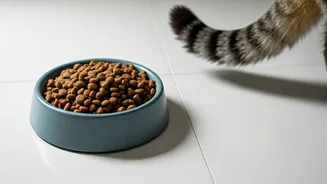
Cats exhibit a curious tendency to pause their meals, only to return and finish later, a behavior often mistaken for satiety. However, scientific investigations
suggest a different culprit: olfactory habituation. Unlike many other animals, including dogs, felines do not cease eating primarily because they are no longer hungry. Instead, their drive to consume food diminishes as they become accustomed to its aroma. Masao Miyazaki, a researcher involved in the study, highlights that repeated exposure to food odors can desensitize a cat, making the smell less stimulating and thus reducing their motivation to eat. This phenomenon is akin to sensory-specific satiety in humans, where one might feel full from a particular flavor but still have an appetite for something different. For cats, this reliance on smell is even more pronounced, directly impacting their eating patterns and leading them to step away when the initial scent appeal wanes.
Olfactory Reset Experiment
Research has shed light on how smell can independently influence a cat's desire to eat. In a series of controlled experiments involving 12 cats on a strict diet, a fascinating pattern emerged. Even after a 16-hour fast, the felines only consumed approximately a third of their provided portion. When food was presented repeatedly, the intake decreased further, indicating a decline in interest. However, the introduction of a novel food or even just its distinct scent dramatically increased their consumption. A particularly insightful experiment utilized a two-part bowl. Cats could eat from the top section, while a different food was placed in the bottom, designed solely to emit its odor. Despite no alteration to the actual food being consumed, the cats showed an increased appetite, demonstrating that scent alone can effectively 'reset' their desire to eat. This suggests that a cat abandoning its food is often a request for a new olfactory stimulus rather than a sign of being completely full.
Evolutionary Eating Habits
The way cats approach their meals is deeply rooted in their evolutionary history. Domesticated cats are believed to have descended from the African wildcat, a solitary hunter that would typically prey on smaller animals multiple times throughout the day. This ancestral lifestyle naturally predisposed them to eating smaller quantities of food more frequently. In contrast, animals like dogs, who evolved as pack hunters often competing for larger kills, tend to consume more substantial portions in a single sitting. This difference in evolutionary pressures has shaped their respective feeding behaviors. Understanding this ancestral context helps explain why your cat might naturally prefer grazing on food throughout the day rather than consuming a large amount at once, and why they might leave food if the immediate appeal of its scent fades.
Practical Insights for Owners
These scientific findings offer valuable practical insights for cat owners seeking to understand and manage their pets' eating habits. When a cat declines food, it's often due to a temporary lack of appetite influenced by scent, rather than a health issue or true fullness. To encourage consistent eating, owners can strategically rotate food flavors and types, as variety can help maintain a cat's interest. Even subtle variations in scent can be effective in stimulating their appetite. Conversely, repeated exposure to the same smell can diminish their motivation. This knowledge can also be beneficial for managing weight in overweight cats by controlling scent exposure to moderate overeating. For sick or senior cats, introducing scent variations might be a key to improving their nutritional intake. Ultimately, paying attention to the olfactory cues can lead to a better understanding of your feline companion's needs.