




Deep Space Communication Hurdles
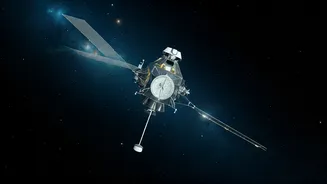
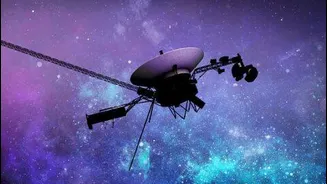
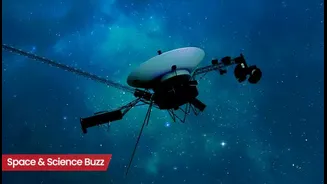
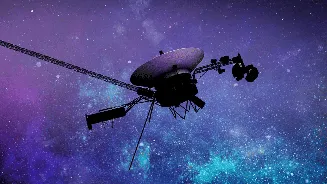
Operating a spacecraft as distant as Voyager 1 presents unique logistical puzzles. Currently positioned 23 light-hours away, every command dispatched from
Earth control necessitates nearly a full day to reach the probe. Following this, another full day passes before confirmation of receipt returns to us. This profound delay fundamentally alters how mission managers must operate, demanding a level of caution and foresight far beyond typical crewed spacecraft missions. Real-time troubleshooting is simply not an option at this extreme remove. Despite these challenges, Voyager 1 steadfastly maintains its vital connection to Earth. This connection is facilitated by its two remaining operational science instruments: the plasma wave subsystems and the magnetometer. These instruments are continuously transmitting groundbreaking scientific data gathered from uncharted regions of space, pushing the boundaries of human exploration.
Strategic Instrument Deactivation
In a proactive move to sustain Voyager 1's extended mission, NASA made the difficult decision to intentionally deactivate a significant science instrument: the Low-energy Charged Particles (LECP) experiment. This crucial component, responsible for nearly continuous measurements of ions, electrons, and cosmic rays originating from beyond the heliosphere since the spacecraft's 1977 launch, was powered down on April 17th, 2026. This deliberate shutdown aligns with a pre-established priority hierarchy, meticulously designed to ensure the longest possible operational lifespan for the spacecraft's most critical systems. By disabling the LECP, engineers aim to optimize the spacecraft's power output and proactively mitigate the risk of future system failures during its ongoing transit through the vast interstellar medium. This strategic conservation of resources is paramount for its continued exploration.
The 'Big Bang' Survival Plan
NASA is currently orchestrating an ambitious initiative, aptly named 'the Big Bang,' with the express purpose of further prolonging the operational life of the Voyager spacecraft. This innovative plan involves a carefully coordinated reconfiguration of several onboard components. The central objective of this strategic overhaul is to maximize the utilization of the spacecraft's finite remaining power reserves. Simultaneously, it aims to maintain internal temperatures sufficiently high to prevent the critical fuel lines from freezing. This groundbreaking procedure is slated for rigorous testing on Voyager 2 during May and June of 2026. Should these tests prove successful, the identical solution will be implemented on Voyager 1, commencing no earlier than July. There remains a slim possibility that this revitalized approach could even allow for the reactivation of instruments that were previously shut down, offering a glimpse of renewed scientific discovery.