









AI Delivery Ecosystem Unveiled
The India AI Impact Summit 2026 served as a prominent stage for the unveiling of a sophisticated, end-to-end autonomous delivery ecosystem, spearheaded
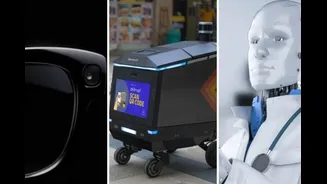
by Indian innovations. This integrated system, featuring Level-4 autonomous delivery robots known as 'Ottobots', is engineered to redefine the landscape of logistics across critical sectors such as healthcare, sprawling industrial campuses, and busy urban centers. The ecosystem harmoniously blends Ottonomy's advanced robots with smart storage solutions from Arrive AI and the drone logistics capabilities of Skyeair Mobility. This powerful synergy facilitates the fluid, unattended movement of goods across both indoor and outdoor spaces, fundamentally reducing the need for human intervention in routine transportation tasks. The demonstration at the summit highlighted India's burgeoning capabilities in developing world-class automation for global applications, positioning local robotics and AI as key drivers of future logistics.
Ottobots Navigate Complex Environments
The 'Ottobots', designed and manufactured in India, represent a significant leap forward in autonomous navigation, achieving Level-4 autonomy. These robots are engineered to expertly maneuver through highly complex and dynamic real-world environments. This includes navigating the often-congested corridors of hospitals, smoothly operating within elevators, traversing public sidewalks, and operating on service roads. The intelligence powering these robots is an AI-driven autonomy stack, which allows them to meticulously perceive their surroundings, adapt dynamically to ever-changing conditions, and make critical decisions in real-time without external prompting. This sophisticated AI ensures safe and efficient operation, even in unpredictable scenarios, making them ideal for sensitive areas like healthcare facilities and busy industrial sites where precision and reliability are paramount. The CEO and founder of Ottonomy Inc. emphasized that these Indian-made robots are capable of powering world-class automation solutions, showcasing India's central role in advancing multi-modal logistics.
Healthcare & Industrial Use Cases
The application of this autonomous delivery ecosystem spans several vital sectors, with particular emphasis on healthcare and industrial/logistics campuses. In healthcare settings, Ottobots are designed to streamline the transportation of essential items such as medical supplies, laboratory specimens, and pharmacy orders. They can also deliver non-critical items between hospital wards, laboratories, and off-site facilities, significantly improving operational efficiency and freeing up clinical staff. For industrial and logistics operations, the robots facilitate the movement of crucial components like parts, tools, maintenance, repair, and operations (MRO) items, as well as quality control samples. These items can be transported seamlessly between warehouses, production lines, and administrative offices. This broad applicability underscores the versatility of the technology, enabling optimized workflows and reduced logistical bottlenecks across diverse operational environments, ensuring timely and secure delivery of critical goods.
World's First Medical Delivery System
A significant milestone in autonomous delivery was achieved at Hancock Regional Hospital in Greenfield, Indiana, with the deployment of what is described as the world's first fully asynchronous and autonomous medical delivery system. This groundbreaking initiative leverages the combined capabilities of Arrive AI's 'Arrive Points' and Ottonomy's 'Ottobots'. 'Arrive Points' are strategically positioned across the hospital campus, serving as secure drop-off and pick-up locations near critical areas like laboratories and surgical centers. Hospital staff can deposit lab samples or supplies into the nearest pod. Subsequently, an Ottobot is dispatched to navigate the hospital's complex interior, including corridors and elevators, and potentially outdoor pathways, to deliver these items to a designated 'Arrive Point'. This system operates reliably under diverse lighting, weather, and traffic conditions, ensuring safe co-existence with patients, staff, and vehicles. The deployment successfully eliminates thousands of manual transport tasks daily, allowing healthcare professionals to dedicate more time to patient care and addressing existing labor shortages.
Indoor-Outdoor Autonomy Seamlessly
The integrated solution provides comprehensive end-to-end operational capabilities that seamlessly bridge both indoor and outdoor environments. Ottobots are designed to transition effortlessly from within hospital wards or factory floors, moving through internal corridors and utilizing elevators. Upon exiting buildings, they can navigate exterior pathways such as sidewalks or service roads to reach perimeter or satellite 'Arrive Points'. This continuous indoor-outdoor autonomy is crucial for applications requiring extended delivery ranges or access to facilities not directly connected by internal pathways. The system's ability to maintain precise navigation and safety protocols across these varied terrains ensures that goods can be transported efficiently and securely, regardless of their starting and ending points within a complex campus or urban setting. This comprehensive approach enhances the overall efficiency and reach of autonomous logistics operations.
Hyperlocal & Smart City Expansion
In India, a significant collaboration is underway between Ottonomy, Arrive AI, and Skyeair Mobility, focused on expanding hyperlocal delivery services, quick-commerce operations, and smart-city infrastructure. This partnership aims to leverage the strengths of each entity to create a robust urban logistics network. Ottobots and Arrive Points will manage the crucial first- and last-50-meter movements within buildings, bustling tech parks, and residential complexes, ensuring efficient localized deliveries. Complementing this, Skyeair's advanced drone capabilities will extend the network's coverage across dense urban corridors, enabling faster delivery of goods over longer distances within cities. This multi-modal approach is meticulously designed to alleviate road congestion, enhance the predictability of delivery times, and actively support the development of digital urban infrastructure initiatives. The synergy between ground-based robotics and aerial drones creates a powerful, integrated system for modern urban logistics.