
Flying Cars Ascend
The concept of personal aerial vehicles, once a staple in futuristic stories, is gradually becoming a reality. Various companies are actively developing
and testing flying cars. These vehicles aim to offer a solution to traffic congestion by providing a faster and more efficient mode of transportation. These innovative machines are designed to take off and land vertically, reducing the need for extensive infrastructure. The primary goal is to make urban air mobility a viable option. Significant advancements in battery technology, autonomous flight systems, and air traffic management are critical for realizing the full potential of flying cars, paving the way for a revolutionary shift in how people commute.
Brain-Computer Interfaces
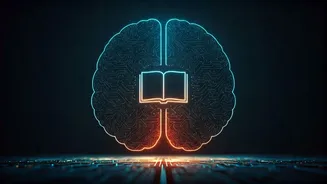
Direct communication between the human brain and computers is no longer a futuristic dream. Brain-computer interfaces (BCIs) are designed to interpret brain signals and translate them into commands for external devices. Scientists are working on both invasive and non-invasive BCI systems. Invasive interfaces involve implanting electrodes directly into the brain, providing more precise signal capture but raising safety concerns. Non-invasive interfaces, utilizing sensors on the scalp, are less accurate but safer. BCIs have numerous applications, including aiding individuals with paralysis by allowing them to control prosthetics or communicate through thought, representing a significant advancement in assistive technology.
Advanced Robotics Evolve
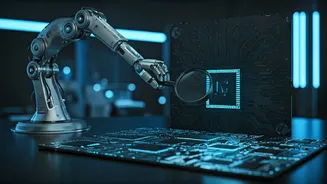
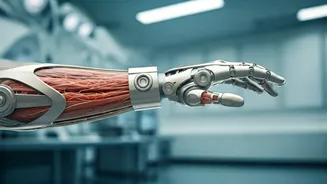
Robotics has moved far beyond simple industrial robots. Developers are creating sophisticated robots capable of performing complex tasks with increasing autonomy. These advanced robots incorporate artificial intelligence, machine learning, and improved sensor technologies. They're being used in manufacturing, healthcare, and even exploring extreme environments. Advances in materials science are leading to the creation of more durable and adaptable robots. Soft robotics, which uses flexible materials to mimic biological structures, is particularly promising. Such technology makes robots safer for human interaction and more effective at navigating intricate environments, expanding the scope of their application.
3D Printing Revolution
3D printing, also known as additive manufacturing, has revolutionized prototyping and production processes. This technology creates three-dimensional objects from digital designs. It works by layering materials, such as plastics, metals, and ceramics. The technology is used across many industries. From aerospace to healthcare, 3D printing is enabling customized products and rapid prototyping. Advancements in materials and printing techniques have broadened the applications of 3D printing. The ability to create complex geometries and customized parts on demand is transforming manufacturing and offering new possibilities in design and engineering.
Artificial Intelligence Flourishes
Artificial intelligence (AI) has become more pervasive than ever, with applications spanning a wide range of fields. Machine learning algorithms, which enable computers to learn from data without explicit programming, are a key driver. AI powers everything from virtual assistants and image recognition to autonomous vehicles. Deep learning, a subset of machine learning, is particularly effective at recognizing patterns. It's behind significant breakthroughs in areas like natural language processing. Ongoing research focuses on improving the efficiency, explainability, and ethical considerations of AI. The continued progress in AI promises to reshape numerous industries, including healthcare, finance, and transportation.
Personalized Medicine Advances
The field of medicine is rapidly evolving towards personalized approaches, where treatments are tailored to the individual patient's genetic makeup, lifestyle, and environment. Genomics, proteomics, and other 'omics' technologies provide detailed insights into the human body. These insights are used to develop targeted therapies and preventive strategies. Advances in diagnostics, such as liquid biopsies, which can detect diseases at early stages, are also significant. Personalized medicine holds promise for more effective treatments. Also, they can reduce side effects, ultimately improving patient outcomes. This shift is revolutionizing how diseases are diagnosed, managed, and treated.
Renewable Energy Dominates
Renewable energy technologies are rapidly becoming more efficient and cost-effective, driving a global shift towards sustainable energy sources. Solar, wind, and hydropower are expanding across the world. They are increasingly integrated into existing energy grids. Energy storage solutions, such as advanced batteries, are critical for managing the intermittency of renewable sources. The drive to achieve carbon neutrality, combined with growing environmental concerns, is accelerating the transition. Technological advancements, such as more efficient solar panels and larger wind turbines, are consistently improving the performance and reliability of renewable energy systems. This shift is crucial for mitigating climate change.
Virtual Reality Expands
Virtual reality (VR) and augmented reality (AR) are transforming how people interact with digital content and the world around them. VR creates immersive, computer-generated environments. AR overlays digital information onto the real world. These technologies are finding applications in gaming, education, training, and healthcare. Advancements in display technology, processing power, and user interfaces are improving the realism and usability of VR/AR experiences. The development of more compact and affordable VR/AR devices is also accelerating adoption. As these technologies mature, they promise to reshape human interaction with both physical and digital environments, opening new possibilities for creativity and productivity.