




The Fiery Re-entry
When the Artemis II capsule, Orion, returns to Earth, it will plunge through the atmosphere at an astonishing 25,000 miles per hour, enduring temperatures
reaching 5,000 degrees Fahrenheit. The sole safeguard for the astronauts during this fiery descent is Orion's heat shield. Unlike most spacecraft systems, the heat shield has no backup; its integrity is paramount. NASA is confident in its functionality for Artemis II, a confidence built through extensive analysis following unexpected performance issues during the uncrewed Artemis I mission. These issues sparked a rigorous investigation, though some prominent figures remain unconvinced about the shield's ultimate reliability for the upcoming crewed flight.
Artemis I Anomaly Unveiled
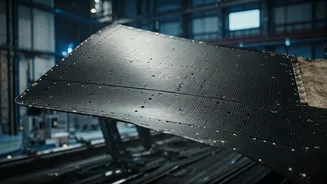
Upon its splashdown in the Pacific Ocean on December 11, 2022, the Artemis I mission concluded a successful 25-day journey, having tested the Space Launch System rocket and Orion capsule, performed lunar flybys, and traveled approximately 270,000 miles. Post-mission analysis of the Orion capsule revealed an unexpected characteristic: its heat shield did not ablate, or char away, as anticipated. The heat shield, a 16.5-foot diameter component made of Avcoat—a silica fiber material originally developed for Apollo missions—is applied in blocks to the capsule's base. Its function is to char and vaporize during re-entry, creating a protective layer. However, NASA observed concerningly large missing chunks and cracking in the shield's material, deviating from expected normal charring.
NASA's Deep Dive Investigation
Despite the observed degradation, NASA stated that the Artemis I heat shield would have still protected the crew, with no abnormal interior or exterior heating detected. However, the significant loss of material highlighted a critical discrepancy between expected and actual performance, raising concerns about vehicle loss during future re-entries. To address this, NASA initiated an in-depth investigation into the root cause of the excess charring. This involved replicating extreme re-entry conditions in terrestrial labs, including those at NASA's Ames Research Center and the Laser Hardened Materials Evaluation Laboratory at Wright-Patterson Air Force Base. Further testing included wind tunnel assessments, permeability studies, and detailed analysis of the recovered Artemis I heat shield samples at Marshall Spaceflight Center.
Root Cause and Skip Entry
In December 2024, NASA announced the identified root cause: the heat shield was insufficiently porous. This led to gases being trapped within its decomposing layer, resulting in the observed cracking and material loss. The agency determined that more permeable sections of the Artemis I heat shield experienced less char loss, corroborating their findings. A significant contributing factor to this gas buildup was identified as the unique re-entry trajectory used on Artemis I: a 'skip entry.' This maneuver, designed to reduce speed and enhance landing precision, involved Orion re-entering the atmosphere, momentarily lifting, and then re-entering again for a splashdown. While this skip entry was highly successful in slowing the capsule and achieving a precise landing, it also caused the Avcoat to heat up sufficiently for trapped gases to build pressure and crack the material in over 100 locations.
Trajectory Adjustment Strategy
Facing the dilemma of whether to redesign the heat shield for Artemis II or proceed with the existing one, NASA opted for the latter, despite the Artemis II heat shield being even less permeable than its predecessor. A redesign would have introduced significant delays. Following extensive testing and a focus on worst-case scenarios, NASA concluded that flying the mission with the current heat shield was safe. To mitigate risks, they decided to modify the re-entry trajectory. Artemis II will still execute a skip entry, but it will be a shorter, more gradual 'lofted entry.' This revised profile is expected to reduce the thermal strain on the heat shield, preventing the extreme heating that led to the charring observed on Artemis I. While some char loss is still anticipated, it is not expected to be of the same magnitude.
Expert Concerns and NASA's Stance
Not all experts share NASA's confidence. Charles Camarda, a former astronaut and heat shield specialist, expressed strong reservations about the decision to fly Artemis II as is, attributing it to a similar organizational culture that he believes contributed to past space shuttle disasters. Camarda argues that NASA has not fully understood the root cause, citing a lack of comprehensive multi-physics analysis and advocating for more external research collaboration. NASA, however, maintains its position, emphasizing its rigorous engineering process of identifying, bounding, and mitigating risks. They assert that their operational mitigations and extensive testing provide sufficient margin to protect the crew, moving forward confidently toward deeper space exploration.
Differing Perspectives on Risk
Other former astronauts and engineers have also voiced concerns. John "Danny" Olivas, who performed on-orbit repairs to the space shuttle's thermal protection system, initially shared Camarda's reservations after reviewing NASA's investigation. While Olivas acknowledges that a complete physics understanding of the Artemis I event remains elusive due to the difficulty in replicating re-entry conditions on Earth, he was ultimately convinced by NASA's worst-case scenario simulations. These simulations demonstrated that even in the event of a complete Avcoat block failure, Orion's carbon fiber backshell would prevent catastrophic failure, ensuring crew safety. Olivas also noted NASA's transparency during his review process, which included independent testing on his behalf, leading to his assurance in the mission's readiness. Spaceflight inherently carries risks, and NASA has determined that the calculated risk for Artemis II is acceptable.
Crew Confidence in Orion
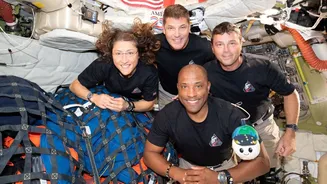
The Artemis II crew themselves have expressed strong confidence in the Orion spacecraft's readiness for their historic mission. Commander Reid Wiseman stated at a press conference that the four astronauts are prepared for this pioneering flight, emphasizing that both the crew and the vehicle are ready to embark on this journey. This collective assurance from the crew, coupled with NASA's thorough analysis and mitigation strategies, underpins the agency's decision to proceed with the Artemis II mission, aiming to push the boundaries of human space exploration further than ever before.