






Next-Gen Memory in Motion
While DDR5 memory has only recently begun its widespread integration into consumer electronics since 2021, the technological pioneers are already charting
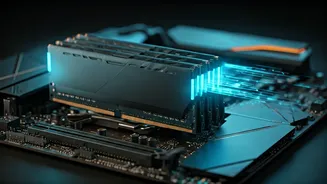
the course for its successor. Leading memory manufacturers, including Samsung Electronics, SK Hynix, and Micron, have initiated the foundational stages of DDR6 development. These collaborations have extended to substrate providers, who are now actively developing early prototypes and conducting rigorous verification processes. This proactive approach, often commencing over two years before a product's official release, signals a serious commitment to advancing memory technology. The industry's early engagement ensures that potential challenges are addressed from the outset, paving the way for smoother future advancements in memory protocols.
Unlocking Unprecedented Speeds
The anticipated performance boost from DDR6 is nothing short of remarkable, with projections suggesting it will more than double the data transfer capabilities of current DDR5 modules, which cap out at 8.4Gbps. This substantial increase in speed is poised to significantly enhance overall system performance across a wide range of applications. However, this leap in speed brings its own set of engineering complexities. As data rates escalate, maintaining the integrity of signals and ensuring power efficiency become considerably more challenging. It's precisely for these intricate technical considerations that substrate manufacturers are involved from the earliest development phases, rather than being brought in at a later stage. Their expertise is crucial in navigating the delicate balance between raw speed and practical implementation.
The Long Road to Market
Despite the promising beginnings, consumers and the industry will need to exercise considerable patience as DDR6 is still a considerable distance from widespread availability. The official specifications for DDR6 have yet to be finalized by the JEDEC standards body. Although a preliminary draft emerged in late 2024, critical details such as physical dimensions, the number of input/output ports, and specific signal integrity standards are still undergoing refinement and definition. Consequently, mass production is not expected to commence until sometime between 2028 and 2029, contingent on a clearer understanding of end-customer demand and market readiness. This staggered timeline highlights the intricate process of standardizing and scaling cutting-edge technology.
AI's Influence on Memory
A significant driving force behind the accelerated development of DDR6 is the burgeoning artificial intelligence sector. AI servers possess an insatiable appetite for memory that can handle data at extremely high speeds and with immense bandwidth. In this context, DDR4 memory, a standard since 2014, is rapidly becoming obsolete. Currently, DDR5 commands over 80% of server DRAM shipments, pushing DDR4's market share below 20% and signaling its likely discontinuation. The demand generated by AI workloads necessitates advancements beyond current DDR5 capabilities, underscoring the critical role of next-generation memory technologies like DDR6 in enabling future AI innovations.
Economic Outlook and Pricing
While the ongoing development of DDR6 is a positive indicator for technological progress, its eventual market adoption will heavily hinge on its pricing strategy. The existing AI boom has already contributed to a substantial escalation in RAM prices, and it is virtually certain that DDR6 will enter the market with a significant premium. However, there is a glimmer of hope for consumers and businesses alike. Current market research suggests a potential stabilization and decline in RAM and storage costs anticipated by 2027. This forecast offers a degree of optimism that prices may normalize before DDR6 becomes widely accessible, potentially easing the financial burden of adopting this advanced memory technology.