
Early Universe Insights
The James Webb Space Telescope, a revolutionary instrument in the realm of astronomy, has provided unprecedented clarity into the very beginnings of the universe.
Its advanced capabilities have enabled astronomers to observe the earliest galaxies, effectively pushing the boundaries of what was previously observable. By analyzing the light from these distant galaxies, JWST is helping researchers understand how the first stars and galaxies formed. These observations are critical in determining the conditions present shortly after the Big Bang and in refining models of cosmic evolution. The telescope's ability to see through dust clouds and detect infrared light allows it to penetrate regions of space previously obscured, providing unique insights into the structure and composition of the nascent universe. This includes data on the chemical elements and the distribution of matter that paved the way for the formation of later cosmic structures, including the galaxies we observe today. The insights derived from JWST are continually refining our understanding of how the universe evolved.
Black Hole Genesis
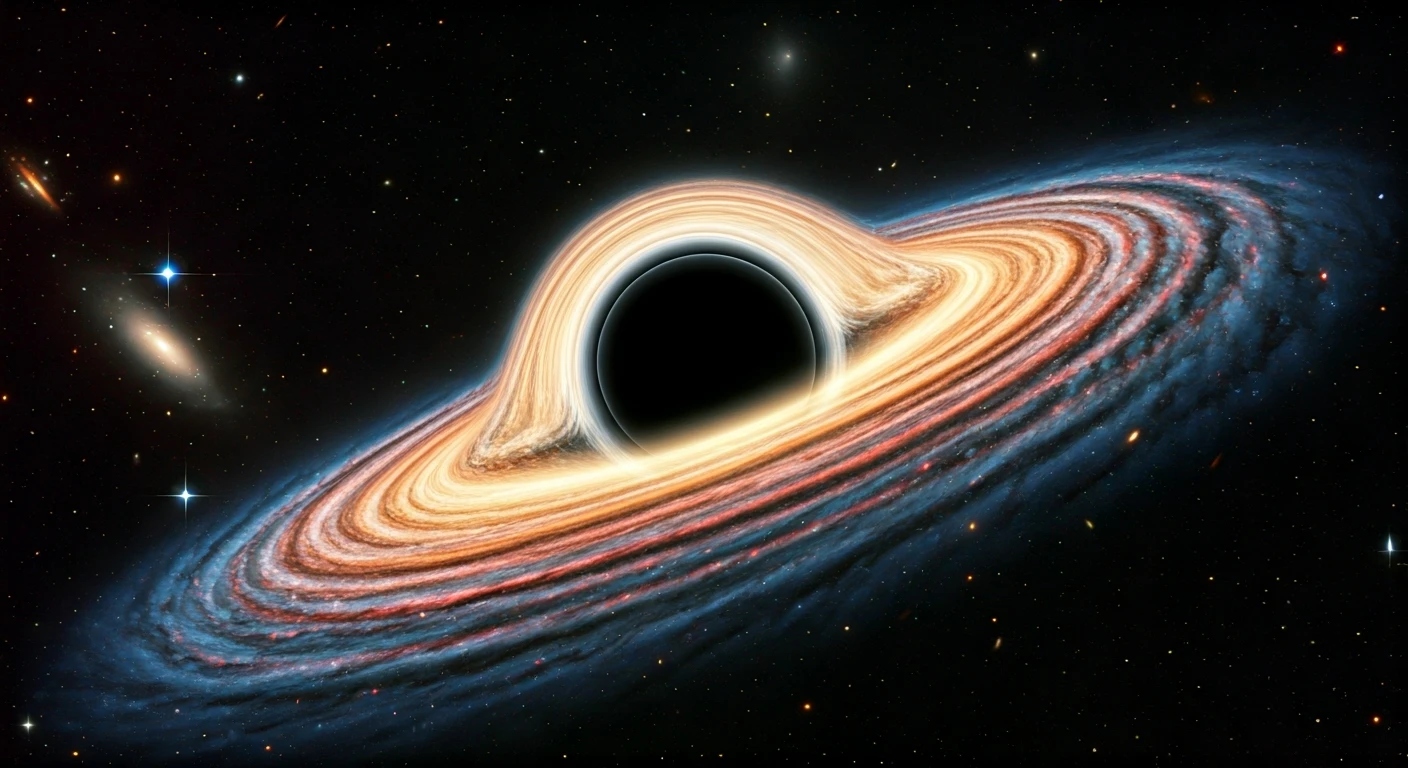
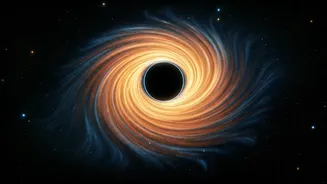
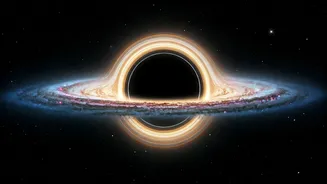
A core focus of the JWST's observations is understanding the formation and evolution of supermassive black holes, the immense gravitational entities residing at the centers of most galaxies. These black holes can have masses millions or even billions of times that of our sun, exerting enormous influence on their galactic environments. Through high-resolution observations, JWST is helping astronomers investigate how these supermassive black holes came into existence so early in the universe's history. These investigations involve studying the accretion disks around the black holes, where matter spirals inward, releasing vast amounts of energy. By measuring the light emitted from these disks, scientists can determine the black holes’ growth rates and the mechanisms that fuel their expansion. Such investigations may offer key insight into the connection between galaxies and black holes, which seem to grow in tandem. Understanding these mechanisms is crucial to completing our understanding of the cosmos.
JWST’s Capabilities
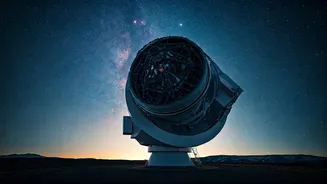
The James Webb Space Telescope's capacity to peer into the distant universe is a product of its cutting-edge technology. It boasts a large mirror, designed to collect faint light from the farthest galaxies. This mirror, composed of segments that unfold in space, is significantly larger than those of its predecessors, such as the Hubble Space Telescope. This increase in light-gathering capacity is crucial for detecting the incredibly weak signals emanating from the early universe. Furthermore, JWST is equipped with advanced infrared sensors, which allow it to observe light that has been stretched by the expansion of the universe. The telescope can peer through cosmic dust clouds that obscure visible light, providing a clearer view of the processes occurring within galaxies and around black holes. Its instruments are highly sensitive to various wavelengths, including the infrared spectrum, which enables astronomers to study the composition of celestial objects and the environments around black holes with unprecedented detail, thus revolutionizing the field of astronomy.
Future Discoveries Ahead
The ongoing observations by the James Webb Space Telescope promise a continuous stream of new information, steadily reshaping our comprehension of the universe. As JWST continues to gather data, astronomers anticipate a wealth of discoveries, including new insights into galaxy formation and the properties of dark matter and dark energy, the mysterious components that make up the universe. The telescope's ability to analyze the light from distant objects will enable scientists to study the chemical composition of early galaxies and the conditions in which stars were born. Moreover, continued observations of supermassive black holes will offer crucial data on their growth, interaction with galaxies, and the role they play in shaping the cosmic web. The data collected by JWST will also enable further exploration of exoplanets, which are planets outside our solar system, potentially revealing more about the possibilities of life beyond Earth. The JWST is thus leading a new era of space exploration, with the potential to unravel more of the universe's greatest mysteries.