





Black Hole Evolution
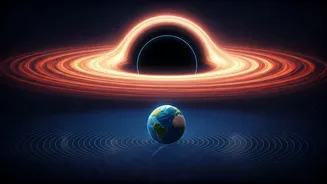
Black holes, those cosmic giants with gravity so immense that nothing, not even light, can escape, are a fundamental aspect of the universe. The question
of how they grew so quickly, especially in the early universe, has been a significant challenge for scientists. The initial models hypothesized the presence of 'seed' black holes, possibly formed from the collapse of massive stars, and suggested these seeds then accreted surrounding matter, growing over billions of years. However, recent observations have unveiled supermassive black holes that achieved colossal sizes far too early in cosmic history, presenting a significant hurdle to these initial theories. This discrepancy has spurred intense scientific inquiry, leading researchers to propose alternative formation mechanisms and growth scenarios that can account for the observed rapid expansion. The quest to understand how these black holes came to be, and to appreciate their swift growth, is at the forefront of modern astrophysical research.
Seed Formation Theories
Researchers have proposed several key theories to explain the origins of black hole seeds, the initial 'building blocks' that eventually evolved into supermassive black holes. One prominent idea is that these seeds came from the direct collapse of massive stars. In this scenario, when a star far exceeds the mass of our sun, it collapses directly into a black hole without going through a supernova explosion. Another theory centers on the remnants of the first stars, which were extremely massive and short-lived. Following their demise, these early stars would have left behind black hole seeds. A more recent hypothesis explores the role of dense stellar clusters within galaxies. These clusters might experience frequent stellar collisions and mergers, creating massive objects that eventually collapse into black holes. Furthermore, some scientists suggest that black holes could have formed directly from the collapse of massive gas clouds in the early universe, bypassing the need for stellar intermediaries. Understanding the exact origins of these seeds is crucial, as their initial mass dictates the subsequent growth trajectory of the black hole.
Rapid Growth Mechanisms
Once the seeds have formed, the mechanisms driving their rapid growth become central to the scientific inquiry. One primary growth pathway involves the accretion of surrounding matter. As black holes reside within galaxies, they're surrounded by gas and dust, and as this material spirals inward, it forms an accretion disk. The friction within this disk heats the material to immense temperatures, creating intense radiation that astronomers can observe. The rate at which the black hole consumes matter directly affects its growth, and the conditions around the black hole, such as the density of the gas and dust, influence how quickly the black hole can expand. Another proposed mechanism is black hole mergers, where two black holes collide and merge to form a larger black hole. The frequency and timing of these mergers, especially in the early universe, can significantly contribute to the rapid growth of these objects. Studying these processes in detail helps scientists understand the timescales involved and reconcile theoretical models with observations of black holes at various stages of evolution.
Implications for Research
The research into the rapid growth of black holes has profound implications for our understanding of the universe. For instance, the findings could reshape how we model the evolution of galaxies. Black holes, especially supermassive ones at the centers of galaxies, exert a powerful influence. The energy released by these black holes during accretion and mergers can influence the star formation rate within galaxies. Understanding black hole growth, therefore, gives us an insight into how galaxies have formed and evolved over cosmic time. Further research is also expected to improve our understanding of dark matter and dark energy, the mysterious components that constitute the vast majority of the universe's mass-energy budget. By precisely studying the environments where black holes grow, we can hope to indirectly probe the influence of dark matter and dark energy on the distribution of matter in the early universe. This research may also lead to improvements in our understanding of the formation of galaxies and the role black holes play in the broader cosmic evolution.
Future Missions, Research
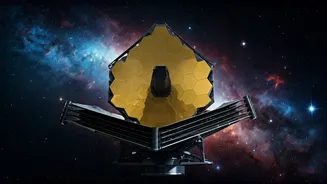
Future space missions and research initiatives are crucial for advancing our understanding of black hole growth. The James Webb Space Telescope (JWST) is already providing unprecedented views of the early universe, allowing astronomers to observe distant galaxies and the supermassive black holes residing within them. JWST’s sensitive infrared capabilities enable us to see through the dust and gas that obscure black holes, revealing details about their growth processes. The development of next-generation telescopes, both ground-based and space-based, will enable even higher-resolution observations, enabling scientists to study black holes in greater detail. Furthermore, research focused on gravitational waves is poised to revolutionize the field. The detection of gravitational waves from black hole mergers, such as those that were previously observed by the LIGO and Virgo collaborations, provides direct evidence of these events and allows scientists to probe the properties of black holes. Theoretical models will need to be refined as observations become more detailed, leading to deeper insights into the underlying physics of black hole growth and the role of these behemoths in the universe's evolution. Through technological advances and collaborative scientific endeavors, we are poised to unravel the mysteries of black hole growth, transforming our understanding of the cosmos.