




Massive Satellite Deployment
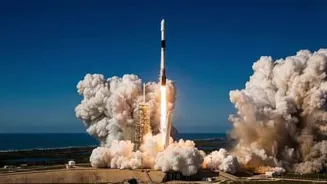
On March 30, 2026, SpaceX achieved a significant milestone with the successful launch of its Transporter-16 mission from Vandenberg Space Force Base. This
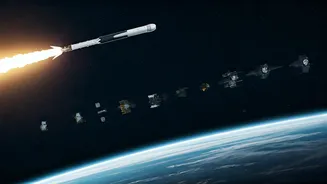
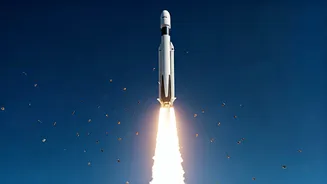
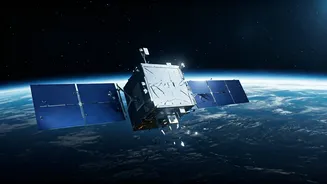
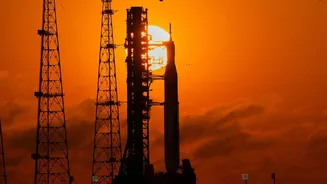
marked the 21st launch from this prominent facility in the year, underscoring the company's substantial influence in the commercial space arena. The Falcon 9 rocket lifted off from Space Launch Complex 4 East (SLC-4E), carrying and subsequently deploying a multitude of microsatellites and CubeSats into a Sun-Synchronous Orbit. This dedicated rideshare mission served as a vital, cost-effective platform for numerous international startups, academic institutions, and governmental bodies to place their specialized payloads into orbit. Following the successful deployment of its cargo, the Falcon 9's first-stage booster executed a flawless Return-to-Launch-Site (RTLS) landing at Landing Zone 4, a testament to the increasing efficiency and reusability of SpaceX's launch vehicles.
Global Reach and Affordability
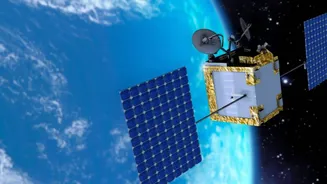
The Transporter-16 mission, facilitated by the Falcon 9 rocket, successfully placed a total of 119 diverse payloads, ranging in size, into Sun-Synchronous Orbit. This comprehensive launch included commercial and institutional contributions from over 20 different nations, featuring a wide array of CubeSats and microsatellites adhering to various standardized dimensions. The rideshare model employed by SpaceX proves particularly beneficial for smaller research organizations, enabling them to substantially reduce the financial burdens associated with space launches by sharing a single rocket. This collaborative approach significantly lowers the barriers to entry for numerous research institutions aspiring to send their experiments and technologies into space, fostering broader participation in space exploration and scientific discovery.
Advancing Earth Science
Among the crucial governmental payloads aboard Transporter-16 was a significant contribution to the National Geospatial-Intelligence Agency's (NGA) MagQuest project. This initiative leverages three distinct CubeSats specifically designed to meticulously measure Earth's magnetic fields. The invaluable data collected by these CubeSats is instrumental in maintaining the World Magnetic Model (WMM), a sophisticated system that provides precise global navigation for a wide range of applications, including GPS-enabled devices and various commercial and maritime vessels navigating the world's oceans.
Pioneering Quantum Communication
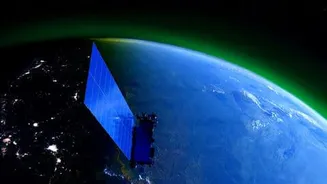
This mission also heralded the deployment of the United Kingdom's Space-based PhOtonics for Quantum Communication (SPOQC) satellite, a pioneering effort in the realm of secure data transmission. The SPOQC satellite, a 12U CubeSat, is engineered to function as a demonstrator for an 'unhackable' method of transmitting quantum-encrypted photons. This groundbreaking technology aims to facilitate secure communication by sending these photons from orbiting satellites to ground stations, representing a fundamental step towards establishing a resilient, global quantum-secure internet capable of defending against the evolving landscape of future cyber threats.
Vandenberg Landing Precision
The Falcon 9 rocket initiated its ascent from Space Launch Complex 4 East (SLC-4E) at Vandenberg Space Force Base. Following the successful separation of the second stage, the first-stage booster of the Falcon 9 executed a remarkably precise Return to Launch Site (RTLS) landing at Landing Zone 4 (LZ-4). This particular type of booster recovery, which is a hallmark of missions launched from Vandenberg SFB, typically generates a noticeable sonic boom that resonates along the Central California coastline as the booster decelerates through the atmosphere. This successful landing further reinforces the operational capabilities and reliability of reusable launch systems.