





The Aging Muscle Enigma
As we get older, our muscles take considerably longer to bounce back after sustaining damage, a common frustration for many. A groundbreaking study conducted
at UCLA, utilizing mouse models, has shed light on an unexpected culprit behind this phenomenon. It appears that muscle stem cells within older tissues accumulate a particular protein. This protein, while seemingly hindering their ability to quickly activate and mend injuries, simultaneously equips them with enhanced resilience to withstand the harsher environmental stressors characteristic of aging tissues. These findings, published in the esteemed journal *Science*, suggest that some biological shifts associated with aging might not be solely detrimental but could play a vital protective part. Dr. Thomas Rando, the senior author and director of UCLA's Broad Center for Regenerative Medicine and Stem Cell Research, posits that this offers a novel perspective on aging, implying that stem cells persisting through age might be less about peak performance and more about sheer endurance and survival, thereby reframing our understanding of tissue decline.
NDRG1: The Dual-Action Protein
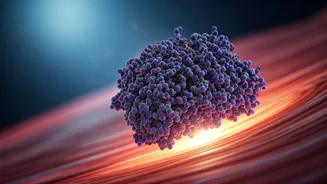
Researchers Jengmin Kang and Daniel Benjamin meticulously examined muscle stem cells harvested from both young and aged mice. Their analysis revealed a significant increase in a protein known as NDRG1 as the mice aged, with older cells exhibiting approximately 3.5 times the levels found in their younger counterparts. This protein functions as an internal regulator, essentially applying the brakes to the mTOR signaling pathway, a crucial system that usually promotes cell activation and growth. To ascertain if NDRG1 was the primary reason for the sluggish repair observed in older muscles, the scientists managed the aging process of the mice to an equivalent of roughly 75 human years and subsequently inhibited the protein's function. Astonishingly, once NDRG1 was suppressed, the aged stem cells rapidly resumed behaviors typical of younger cells, demonstrating faster activation and a marked improvement in muscle repair post-injury. However, this enhanced repair capacity came with a notable consequence: the protective buffering effect of NDRG1 diminished, leading to a reduction in the overall number of stem cells over time, thereby compromising the tissue's ability to recover from recurrent damage.
Survival vs. Repair Trade-off
Dr. Rando likens this cellular dynamic to the difference between a sprinter and a marathon runner. He explains that the highly active stem cells in younger animals are like sprinters – exceptionally good at their immediate task but not built for endurance. They excel in short bursts but falter over extended periods. In contrast, aged stem cells are akin to marathon runners; they respond more slowly but are far better equipped for the long haul. The very characteristics that make them proficient over vast distances—their slower, more deliberate operation—are precisely what makes them less effective at rapid, short-term responses like sprinting. The research team substantiated these findings through various experimental methods, scrutinizing muscle stem cells from both young and aged mice in laboratory settings and within living organisms. Consistently, elevated NDRG1 levels correlated with slower activation and repair processes, alongside enhanced cell longevity and resilience over extended periods.
Cellular Survivorship Bias Explained
These observations strongly suggest a phenomenon the scientists have termed 'cellular survivorship bias.' Essentially, muscle stem cells that do not accumulate sufficient levels of NDRG1 tend to perish as time progresses. This leaves behind a residual population of cells that, while more robust and resistant to environmental stressors, are significantly less efficient in their primary repair functions. Dr. Rando elaborates that certain age-related changes, which might appear detrimental like slower tissue repair, could actually represent necessary compromises. These compromises are in place to prevent a more catastrophic outcome: the complete exhaustion and depletion of the entire stem cell reservoir. He draws parallels to survival strategies observed throughout the natural world, where organisms in extreme environments, such as prolonged droughts or periods of famine, often prioritize survival and self-preservation over reproduction. Similarly, it appears stem cells, as tissues age, reallocate resources away from generating new cells and towards ensuring their own continued existence and functionality.
Therapeutic Potential and Caveats
The insights gleaned from this research hold significant promise for developing future therapeutic interventions aimed at enhancing tissue repair. Such treatments could potentially involve fine-tuning the delicate equilibrium between stem cell activity and their inherent survival mechanisms. However, Dr. Rando cautions that any such intervention will inevitably involve a complex interplay of trade-offs. He emphasizes that there is no simple, consequence-free solution. While it may be possible to temporarily boost the function of aged cells in specific tissues, there will likely be associated costs and potential downsides to each intervention. The research team intends to further investigate the intricate molecular pathways that govern this critical balance. Dr. Rando views NDRG1 as a pivotal entry point, opening doors to understanding the mechanisms that control these trade-offs, which are crucial not only for the evolutionary success of species but also for the aging process of tissues within an individual organism.