







Brain's Role in Hypertension
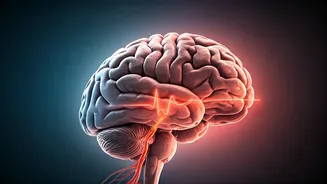
Recent scientific endeavors have illuminated a specific area within the brainstem, known as the lateral parafacial region, as a potential contributor to the development
of high blood pressure. This ancient part of our brain is fundamental for regulating involuntary bodily functions like respiration, digestion, and heart rate. Professor Julian Paton, a leading researcher, explains that this region is actively engaged during actions involving forced exhalation, such as laughing, exercising, or coughing, which are driven by powerful abdominal muscles, unlike the passive exhalation that relies on lung elasticity. The critical finding is that this same brain area communicates with nerve pathways that constrict blood vessels, a process that directly elevates blood pressure. This connection strongly suggests that the brain, through the lateral parafacial region, can indeed be a causal factor in hypertension. Experiments where this specific brain region was inactivated led to blood pressure returning to normal levels, underscoring its significant role.
Targeting the Source
The discovery of the lateral parafacial region's influence on blood pressure has prompted researchers to investigate methods for therapeutically targeting this area. However, administering drugs directly to the brain presents a significant challenge, as medications typically affect the entire brain rather than a single, localized region like the parafacial nucleus. This limitation necessitates an alternative approach. Fortunately, scientists have identified that the signals activating this critical brainstem region do not solely originate internally. A crucial external source has been found: the carotid bodies. These are small collections of cells situated in the neck, close to the carotid artery, which are adept at detecting the oxygen levels within the bloodstream. This external location of the carotid bodies offers a more promising pathway for intervention, potentially allowing for safer targeting with medication compared to direct brain penetration.
New Treatment Strategies
The identification of carotid bodies as external regulators of the lateral parafacial region opens exciting possibilities for novel treatment strategies for high blood pressure. The research team is actively exploring the use of a repurposed drug designed to diminish the activity of these carotid bodies. By 'quench[ing]' their activity, the aim is to 'remotely' and safely inactivate the lateral parafacial region without the need for drugs that cross the blood-brain barrier. This approach holds particular promise for individuals suffering from conditions like sleep apnea, where carotid bodies are known to become hyperactive due to intermittent breathing cessations during sleep. By modulating carotid body function, it may be possible to indirectly control the overactive lateral parafacial region and, consequently, lower blood pressure, offering a much-needed therapeutic breakthrough for a significant portion of the hypertensive population.