






Lithium's Potential Exploited
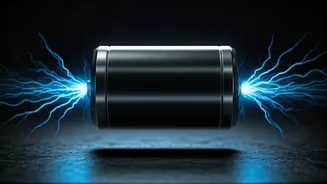
The 'dream battery' project represents a significant leap forward in battery technology, utilizing magnetic control to enhance the performance and safety
of lithium-based batteries. Lithium, known for its high energy density and lightweight nature, is a key component in many modern batteries. However, its inherent reactivity poses safety challenges, including the risk of thermal runaway and explosions. Scientists recognized this issue and sought to mitigate these risks while still leveraging the benefits of lithium. Their solution involves using magnetic fields to precisely control the movement and behavior of lithium ions within the battery. By manipulating these ions, researchers can significantly improve the battery's safety, capacity, and overall lifespan, creating a more sustainable and reliable power source for various applications. This approach avoids the limitations associated with conventional battery designs, which often compromise between energy density and safety.
Magnetic Field Mastery
The core of this innovation lies in the precise application of magnetic fields within the battery's structure. These fields act as a sophisticated control mechanism, guiding the flow of lithium ions during charging and discharging cycles. This precise management prevents the formation of dendrites, which are needle-like structures that can cause short circuits and catastrophic failure. Dendrite formation has long been a significant concern in lithium-ion batteries, as they can penetrate the separator and lead to thermal runaway. The magnetic field control approach addresses this directly, effectively eliminating the potential for dendrite growth. Furthermore, the magnetic fields can also optimize the arrangement of lithium ions, maximizing the energy storage capacity of the battery. This increased capacity allows for extended use and reduced need for frequent charging. This approach is not only safer but also enhances the overall efficiency and longevity of the battery, offering a viable alternative to existing technologies and significantly impacting industries dependent on energy storage.
Safer, High Capacity
The magnetic control method promises to drastically reduce the risks associated with lithium-ion batteries. Traditional lithium-ion batteries, when improperly handled or manufactured, have the potential for fire and explosion due to thermal runaway. The 'dream battery' design significantly mitigates these risks by providing a controlled environment for lithium ions. This means consumers and industries can benefit from a safer energy storage solution. Beyond safety, the technology also offers a significant boost in energy capacity. By optimizing the arrangement of lithium ions within the battery, the magnetic field technology enables batteries to store a greater amount of energy per unit volume, which is a game-changer. This increased capacity has various implications, including longer battery life for portable electronics, more range for electric vehicles, and improved energy storage for renewable energy systems. High-capacity batteries can also contribute to reducing the environmental impact of electronic waste by making devices more durable and reducing the frequency of replacement.
Future Implications Unveiled
The successful development of this 'dream battery' has profound implications for a wide range of industries. It could revolutionize the electric vehicle sector by increasing driving ranges, reducing charging times, and enhancing safety. The improvement in battery safety and capacity could significantly accelerate the adoption of EVs worldwide. Moreover, the technology could play a crucial role in enabling broader adoption of renewable energy sources. Better energy storage solutions are essential for managing the intermittent nature of solar and wind power. By storing excess energy generated during peak times and releasing it when needed, these batteries can provide a consistent and reliable power supply, making renewable energy a more practical and competitive option. Furthermore, this innovation could transform the landscape of portable electronics, increasing battery life and allowing for the creation of more powerful and durable devices. The research into magnetic control of lithium represents a major advancement in the quest for safer, more efficient, and more sustainable energy storage solutions, setting the stage for future technological advancements.