
A Record-Breaking Find
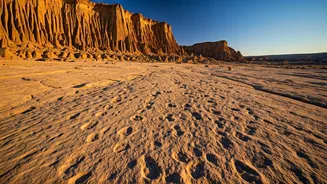
The discovery of over 18,000 dinosaur tracks along an ancient Bolivian coastline marks a monumental achievement in paleontology. This remarkable find surpasses
all previous records for track density in a single location, making it a pivotal site for studying dinosaur behavior and the ecosystems they thrived in. The sheer volume of tracks indicates a significant presence of dinosaurs in this area during the prehistoric era, offering an unparalleled opportunity to learn more about their daily lives, social interactions, and movements. This discovery underscores the importance of continued research and exploration, leading to a deeper understanding of Earth's rich history and its ancient inhabitants. The unearthed tracks promise to be a treasure trove of information for researchers around the world, providing invaluable insights into a world long gone but still capable of captivating us with its secrets.
Coastal Dinosaur Life
The ancient Bolivian coastline, where the tracks were found, provides a unique context for understanding dinosaur life. The presence of such a vast number of tracks in a coastal environment suggests that the area served as a crucial habitat or migratory route for various dinosaur species. Scientists can deduce information about the dinosaurs' feeding habits, as well as the types of plants available at the time, through analysis of the environmental setting. The tracks reveal how dinosaurs interacted with their environment, whether foraging, seeking refuge, or simply traversing the terrain. The specifics of the coastline – its topography, vegetation, and climate – would have all influenced dinosaur behavior. This setting is useful in providing a detailed picture of the lives of the dinosaurs and the delicate ecosystem that supported them. It also gives researchers more to examine when discovering more about the tracks, and helps them to find further clues to what the dinosaur's lives could have been like.
Track Identification Details
Analyzing the 18,000 dinosaur tracks requires careful identification and classification. Paleontologists will meticulously study each track, looking at its size, shape, and depth to determine the type of dinosaur that made it. This process helps them identify different species present in the area, offering a more complete picture of the dinosaur population. Certain track features indicate whether the dinosaurs were bipedal or quadrupedal, their approximate size, and even their walking or running speeds. Advanced techniques such as 3D modeling and analysis of sediment layers will further help refine track identification and understanding. The work of identifying the tracks also includes documenting the different gaits and social behavior the dinosaurs may have had, like evidence of herd behaviors. This detailed track analysis will also help in reconstructing the paleoenvironment and understanding the dinosaurs’ ecological interactions.
Behavioral Insights Gained
The discovery of a large number of tracks offers researchers unique insights into the behavior of dinosaurs. The patterns of the tracks can show whether they moved alone or in groups, providing evidence about social behaviors, such as herd dynamics and migration patterns. The spacing and direction of tracks can indicate running speed, as well as the type of terrain they were traversing. The overlapping of tracks might reveal interactions between dinosaurs, possibly showing signs of aggression, mating rituals, or even hunting. The study of track variations, like different sizes and spacing, can also offer insights into the growth stages of individual dinosaurs and the diversity of the population. By closely examining the location, orientation, and context of the tracks, scientists can piece together a more comprehensive picture of how dinosaurs lived, interacted, and behaved within their environment. The analysis of these tracks provides a window into a hidden world that is not easily seen.
Preservation and Research
The preservation of this massive trove of dinosaur tracks is a top priority for scientists. Conservation efforts include protecting the tracks from erosion, weathering, and human interference. This might involve creating protective structures, such as shelters, or implementing strict guidelines for accessing the site. The site will be carefully monitored to track any changes. The scientific research will include in-depth mapping of the tracks, detailed documentation of their features, and sophisticated analysis using various tools, such as the ones mentioned previously. This research will go on for a long period of time and involve international collaboration. The Bolivian discovery is a significant one that gives the world the opportunity to learn more about the prehistoric age, and should be treated with the utmost care.