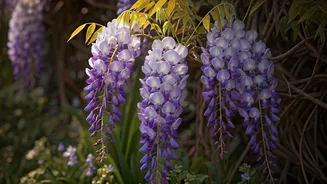







Wisteria's Double-Edged Bloom
As spring unfurls, wisteria vines erupt in a cascade of fragrant, purple flowers, becoming a beloved spectacle across landscapes, particularly in the southeastern
United States. However, this visual delight conceals a significant ecological concern. Many of the wisteria varieties admired for their prolific blooms were introduced from abroad, specifically China and Japan, during the early 1800s. Lacking natural predators and diseases that would typically regulate their growth in their native lands, these exotic species have become aggressively invasive in the U.S. They possess an unchecked ability to spread, often outcompeting and suffocating native plant life, thereby disrupting delicate ecosystems. This unchecked growth can lead to severe consequences, including the decline of biodiversity and potential erosion issues, as noted by plant biologists.
The Invasive Invasion Explained
The introduction of Chinese (Wisteria sinensis) and Japanese (Wisteria floribunda) wisteria to the United States, occurring in 1816 and 1830 respectively, was part of a broader trend in horticulture during that era. Driven by a desire for exotic and novel plants, horticulturalists brought back species believed to thrive in similar climates to their native lands. This assumption proved tragically correct for wisteria, which found the American environment hospitable, minus the natural checks and balances. The mindset then often favored the foreign over the native, overlooking the potential detrimental impacts. These invasive vines exhibit remarkable resilience, growing up to 15 inches in diameter and climbing as high as 65 feet. Their aggressive nature allows them to overwhelm existing vegetation, forming dense thickets that deny sunlight to understory plants, thus affecting the food sources for local wildlife. In some states, the sale and cultivation of these invasive species are now legally restricted due to their destructive potential.
Ecological Ramifications of Wisteria
The unchecked expansion of invasive wisteria poses a grave threat to native plant communities and the broader ecosystem. These vigorous vines act as 'bullies' in the plant world, as described by experts, aggressively covering tree canopies. This dense foliage shades out native plants that are essential for the survival of local wildlife, limiting their access to sunlight needed for photosynthesis. Furthermore, wisteria can directly kill trees by wrapping around their trunks like a constrictor, effectively suffocating them. Without the natural regulatory mechanisms of pests and diseases that control their growth in their native habitats, invasive wisteria can spread at an alarming rate, up to 15 inches per day in some instances. This unchecked proliferation can lead to a significant reduction in the diversity of plant and animal life that can survive in affected areas, potentially causing a cascade of negative effects within the ecosystem.
Embracing Native Alternatives
Fortunately, there is a beautiful and ecologically sound alternative for wisteria enthusiasts: American wisteria (Wisteria frutescens). This native species offers the charm of wisteria's blooms but without the destructive invasive tendencies of its Asian counterparts. While American wisteria's flower clusters are typically smaller, many find its native beauty even more appealing. It is also significantly 'tamer' in its growth habits, meaning it won't aggressively strangle trees or dominate entire ecosystems. Experts champion native wisteria as a preferred choice, noting its role as a host plant for numerous butterfly and moth species, thereby supporting local biodiversity. For those concerned about managing existing invasive wisteria, ongoing efforts involving herbicides and controlled burns are employed by agencies, but prevention through careful planting is the most effective strategy. Citizen science apps also play a role in identifying and reporting invasive species, helping to track their spread and inform management efforts.