






Dark Matter Unveiled
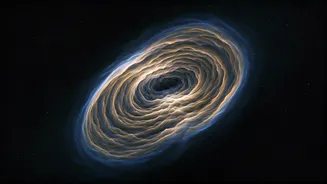
Hubble's capacity to perceive the cosmos has allowed for the identification of a dark matter cloud, a structure devoid of stars. This finding offers an
opportunity to examine these shadowy formations, potentially revealing more about the universe's overall composition and the role of dark matter. The identification of this starless cloud is a significant advancement in astrophysics. It's a key milestone in our ability to probe these mysterious substances that make up a large portion of the universe, and it offers insight into its structure and evolution. Discovering such a cloud also encourages further study into how these areas may have developed and their influence on galaxy formation. This provides scientists with data to study how dark matter affects the cosmos's formation.
Betelgeuse's Companion Star
Hubble has also examined Betelgeuse, a red supergiant star, identifying evidence of a hidden companion star. This discovery validates previous hypotheses regarding Betelgeuse's nature, shedding light on the star's dynamic behavior. Observing the aftermath of its activities offers a chance to look at how these massive stars interact with their surroundings. The findings could greatly alter how researchers understand stellar evolution and the effects of stellar companions. It underscores the ongoing investigation of the cosmos and how new technology and observations continue to advance our comprehension of the universe's complexities. The ability to identify this companion has also helped to explain several of Betelgeuse's previously observed characteristics.
Mount Sharp Panorama
NASA's Curiosity Rover, exploring Mars, sent back a stunning panoramic image from high on Mount Sharp. This image provides an unprecedented view of the Martian landscape. The panorama allows for detailed study of the geology and environment of Mars, offering valuable insights into the planet's history and potential for past or present habitability. The new photo will likely be used to inform further investigations, including the gathering of additional data about the geological makeup of the region. Through the use of various instruments, the rover's findings are sent back to scientists, enabling them to discover more about Mars's past and to potentially get closer to answering the question of life on other planets.
Expanding Knowledge Horizons
These discoveries, powered by advanced technology like the Hubble Space Telescope and robotic explorations such as the Curiosity Rover, push the boundaries of current knowledge and fuel further scientific inquiry. The ongoing observations and data collection are vital for expanding our comprehension of the universe, offering clues about the origins of dark matter and the intricacies of stellar systems. This scientific approach has helped develop and confirm a lot of theories, like the way dark matter forms or how binary stars change. These findings also serve as a reminder of the continual discoveries waiting to be made by combining technology and research.