






Seamless AI Operations
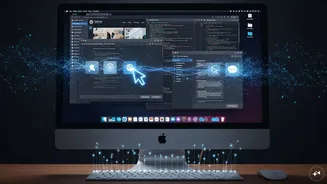
Anthropic's latest innovation introduces a remarkable capability for its Claude AI: the direct control of your computer. This groundbreaking feature operates
by first checking for existing integrations with services like Slack or Google Calendar. If a direct connection is available, Claude utilizes that pathway for efficiency. However, when no pre-built connector exists for a specific task, the AI seamlessly transitions to screen control, mimicking human actions. This means Claude can open documents, navigate web browsers, input text into forms, and interact with menus – essentially performing any action you would carry out yourself. Crucially, before initiating any interaction with a new application, Claude always seeks your explicit permission, and you retain the ability to halt its operations at any moment, ensuring user oversight and control over the AI's actions.
Task Delegation Powerhouse
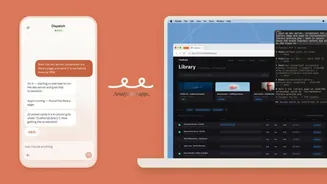
This advanced computer control feature is significantly enhanced when paired with Dispatch, Anthropic's dedicated task-assignment tool. Dispatch empowers users to delegate work remotely, even from their mobile phones. The synergy between Claude's computer control and Dispatch transforms it from a mere novelty into a potent productivity enhancer. Imagine assigning a complex task on your commute; by the time you settle at your desk, the completed work is ready and waiting. The utility extends to recurring duties as well. Users can schedule daily or weekly tasks, such as scanning an inbox every morning or compiling weekly metrics every Friday. Claude then autonomously handles these assignments on schedule without requiring further prompting, freeing up valuable user time and mental bandwidth.
Navigating Security Concerns
Handing over control of your computer to an AI model naturally raises security considerations, and Anthropic is transparent about these potential risks. A primary concern is 'prompt injection,' where malicious instructions embedded within web pages or documents could subtly override your intended commands to Claude. To mitigate this, Anthropic has developed a real-time classifier that scrutinizes content for such injections. If detected, Claude pauses its operation and seeks your confirmation before proceeding. Furthermore, the system is designed to disable access to certain sensitive applications by default, adding another layer of protection. It's important to recognize that this is an early-stage software offering. Complex tasks might occasionally require a second attempt, and navigating your screen is inherently slower than using direct API integrations. Claude's reliability can also diminish when encountering less common or unfamiliar software.
AI Agent Landscape
Claude's entry into direct computer control positions it within a rapidly evolving AI agent landscape, directly challenging existing frameworks like OpenClaw. OpenClaw, an open-source project, has rapidly gained traction, fostering an ecosystem of AI tools capable of semi-autonomous computer operations. More recently, Nvidia introduced NemoClaw, a framework designed to deploy OpenClaw agents with integrated security measures. Anthropic's approach distinguishes itself through a focus on robust safety controls, a polished consumer-oriented product rather than a developer toolkit, and deeper integration within its own application ecosystem. This represents a more conservative strategy in a field characterized by rapid, sometimes less cautious, development. The ultimate success of this approach hinges on whether this deliberate tradeoff will resonate with and attract users.
Getting Started Now
For those eager to experience this new capability, the feature is currently accessible to Pro and Max subscribers. It requires the Claude desktop application to be installed and running on a macOS system. While the mobile app can be used for assigning tasks via Dispatch, it cannot directly control your computer. The feature is being rolled out as a research preview, a deliberate strategy by Anthropic to identify its limitations and areas for improvement before a wider public release. Given the direct access this feature has to a user's live desktop environment, this measured pace of development and rollout is a prudent and responsible choice, prioritizing user safety and system integrity.