


Holi Dates Explained
Holi, the jubilant festival marking the arrival of spring and the triumph of good over evil, often presents a slight quandary regarding its exact celebration
dates each year. For 2026, the festival of colors will be observed on Wednesday, March 4th. This vibrant occasion is preceded by Holika Dahan, the ceremonial bonfire, which will take place on the preceding evening, Tuesday, March 3rd. The confusion often arises due to the lunar calendar, where specific celestial alignments dictate the timing of these significant events. The Purnima Tithi, or the full moon phase, which is crucial for determining the dates, begins at 05:55 PM on March 2nd, 2026, and concludes at 05:07 PM on March 3rd, 2026. Understanding these precise tithi timings is key to accurately pinpointing the celebrations and ensuring adherence to traditional practices.
Holika Dahan Auspicious Timing
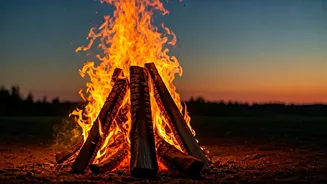
Holika Dahan, a pivotal ritual preceding the main Holi festivities, is observed with specific auspicious timings to ensure its sanctity and efficacy. In 2026, the most propitious period for Holika Dahan falls between 06:22 PM and 08:50 PM on Tuesday, March 3rd, offering a window of approximately 2 hours and 28 minutes for the ceremonial lighting of the bonfire. Hindu scriptures emphasize that Holika Dahan, also referred to as Holika Deepak or Chhoti Holi, should ideally be conducted during the Pradosh Kaal, the period spanning from sunset to twilight, provided the Purnimasi Tithi is still in effect. A critical consideration during this period is the presence of Bhadra, an inauspicious astrological period. Bhadra Punchha occurs from 01:25 AM to 02:35 AM, followed by Bhadra Mukha from 02:35 AM to 04:30 AM. To uphold tradition and avoid any untoward influences, it is customary to refrain from performing auspicious activities when Bhadra prevails. Therefore, the Holika Dahan on March 3rd, 2026, will be performed during Pradosh Kaal without Udaya Vyapini Purnima, adhering to the guidelines of conducting the ritual during the Purnima Tithi that concludes on that day.
Historical Roots of Holi
The origins of Holi are steeped in ancient traditions, with some scholars tracing its beginnings to Vedic fire rituals aimed at celebrating the harvest and warding off winter's malevolence. Texts like the Rigveda mention "Holaka," or purification bonfires, observed during Phalguna (February-March) to welcome spring and ensure agricultural renewal. These early rituals were more about communal cleansing and appeasing nature. As Puranic traditions evolved, these practices became interwoven with captivating legends. The most prominent narrative involves Prahlad, the devout son of the demon king Hiranyakashipu. Prahlad's unwavering devotion to Lord Vishnu led his aunt, Holika, who possessed a boon of fire immunity, to attempt to burn him alive on a pyre. However, Holika perished in the flames while Prahlad emerged unscathed, a testament to divine justice. This story directly inspired the Holika Dahan bonfire tradition. Furthermore, the playful antics of Lord Krishna during his youth, specifically his enthusiastic engagement in the festival, have contributed significantly to the folklore surrounding Holi, fostering its reputation as a festival of joy and revelry.
Celebration Across India
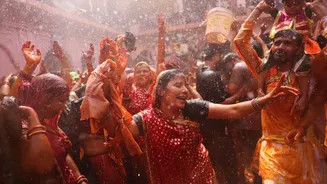
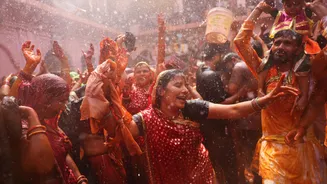
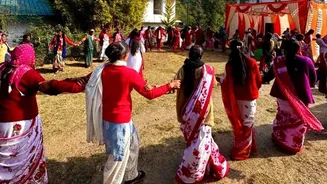
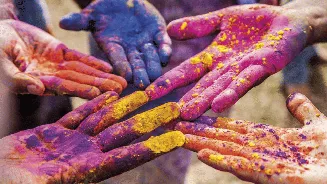
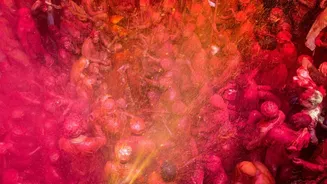
Holi is celebrated with a spectrum of regional variations, each adding a unique flavor to the overarching festival of colors and joy. While the core elements of Holika Dahan and the subsequent day of playful color-throwing remain consistent, specific customs differ. For instance, Bengal observes Basanta Utsav, characterized by rice-flinging, while Braj is renowned for its Lathmar Holi, where women playfully beat men with sticks. Generally, the festival commences with Holika Dahan, a ritualistic bonfire where prayers are offered for family protection, accompanied by offerings of ghee, cow dung cakes, and coconuts. The following day, known as Holi or Rangwali Holi, begins with devotees playing with colors, often starting with idols in homes or temples, followed by seeking blessings from elders and offering Prasad to family deities. The vibrant play of colors then extends to friends and relatives, creating an atmosphere of unbridled mirth and camaraderie. In the evening, it's customary for families to gather, exchange good wishes, and share delicious festive food, reinforcing bonds of community and goodwill.