


The Ghostly Neutron Stars
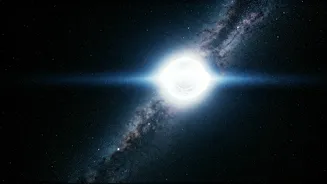
Astronomers have long theorized that our Milky Way galaxy is teeming with neutron stars, the incredibly dense cores left behind after massive stars explode
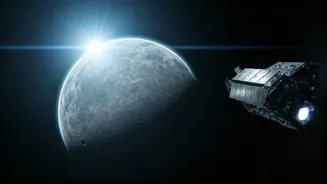
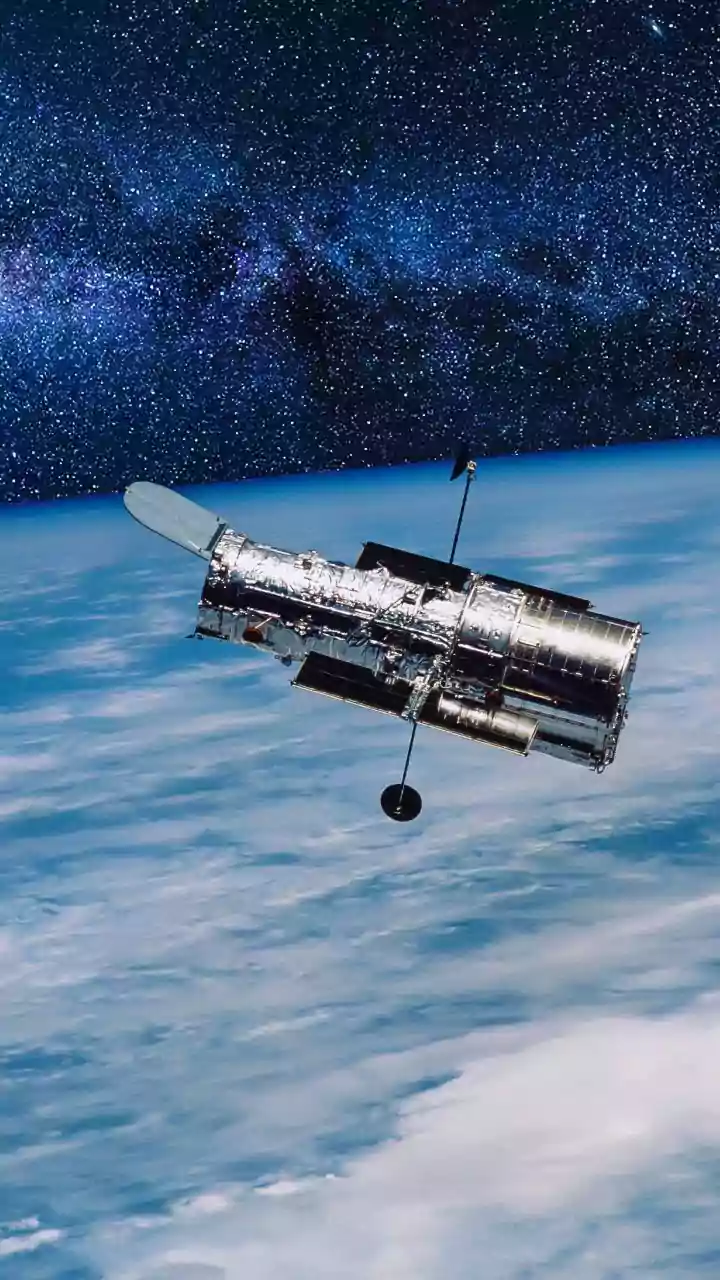
in dramatic supernova events. Despite their expected abundance, most of these stellar remnants remain hidden from our view, posing a significant astronomical puzzle. These ultra-dense objects, packing more mass than our Sun into a sphere roughly the size of a city, are typically faint and isolated, making them exceedingly difficult to detect with current observatories. Their invisibility is primarily due to their minimal emission of visible light, and unless they exhibit pulsed radio emissions as pulsars or strong X-ray signals, they largely evade detection. The upcoming Nancy Grace Roman Space Telescope, however, is poised to change this, offering a revolutionary new capability to finally uncover this missing population and shed light on their distribution and properties across our galaxy.
Microlensing: Gravity's Helping Hand
The key to finding these phantom neutron stars lies in a fascinating astronomical phenomenon known as gravitational microlensing. This occurs when a massive object, such as a neutron star, drifts in front of a more distant star from our perspective. The intense gravity of the foreground neutron star acts like a lens, bending and focusing the light from the background star. This bending effect causes the background star to temporarily appear brighter and its apparent position in the sky to shift slightly. While many telescopes can detect the brightening aspect of microlensing, the Roman Telescope is anticipated to possess exceptional precision, allowing it to measure both the brightening (photometry) and, crucially, the minute positional shift (astrometry). Because neutron stars are so massive compared to many other lensing objects, they produce a more pronounced astrometric signal, potentially enabling direct mass measurements of these otherwise unseen entities.
Roman's Astrometric Advantage
The Roman Space Telescope's advanced capabilities, particularly its Wide Field Instrument and its unprecedented astrometric precision, are game-changers for detecting isolated neutron stars. Unlike traditional photometric methods that primarily register the light increase during a microlensing event, Roman's ability to precisely track the tiny movements of background stars will be pivotal. When a neutron star passes in front of a distant star, its gravity causes a measurable shift in the background star's position. This shift traces a small elliptical path on the sky as the alignment changes. The magnitude of this shift is directly proportional to the mass of the foreground object. By accurately measuring this astrometric deflection, astronomers can effectively 'weigh' the unseen neutron star, a feat extremely difficult through photometry alone. This opens up the possibility of not only detecting these hidden objects but also determining their masses, providing crucial data for understanding stellar evolution and the physics of extreme matter.
Expanding Cosmic Knowledge
The discovery of a significant population of isolated neutron stars through the Roman Telescope's microlensing survey promises to revolutionize our understanding of stellar evolution and galactic dynamics. Scientists anticipate that the data gathered could help resolve long-standing questions about the mass distribution of neutron stars and black holes, potentially clarifying where the mass ranges of these compact objects diverge. Furthermore, the observations may provide insights into the violent 'kicks' neutron stars receive during supernova explosions, which can propel them across the galaxy at immense speeds. Even the identification of a few isolated neutron stars with measured masses would be a monumental achievement, offering valuable data points to refine theories of stellar explosions and the behavior of matter under conditions of extreme pressure and density not replicable on Earth. This breakthrough could fundamentally alter our census of the Milky Way's stellar remnants.