




The Drought Dilemma
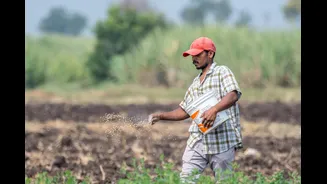
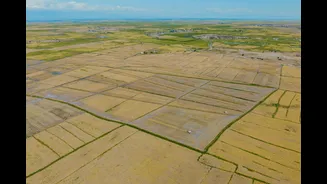
In the face of escalating climate change and its devastating impact, agricultural practices worldwide are grappling with the critical threat of drought.
This persistent water scarcity poses a significant risk to crop yields and food security. Traditional farming methods often rely heavily on irrigation, a process that strains already limited water resources. Recognizing this urgent challenge, scientists and innovators are actively seeking sustainable solutions to improve water retention in soils, particularly in arid and sandy regions where water drains away rapidly. The development of materials capable of acting as miniature water reservoirs within the soil has become a paramount concern, offering a ray of hope for more resilient and water-efficient agriculture.
An Orange Peel Solution
Amidst South Africa's severe drought, a remarkable young mind, Kiara Nirghin, stepped forward with an innovative approach to combat agricultural water woes. Driven by the pressing need to support her nation's struggling crops, she focused on repurposing readily available organic waste: orange peels. Her goal was not to create a complex scientific marvel but rather an economical and biodegradable alternative to existing agricultural aids. Through diligent experimentation with various waste materials, she investigated their potential for absorbing and retaining moisture. This exploration culminated in the creation of a unique hydrogel derived from orange peel extracts, a breakthrough that garnered international acclaim, including a prestigious award at Google's Science Fair. This achievement underscored the power of youthful ingenuity in addressing environmental crises with simple, cost-effective scientific thinking, inspiring a global wave of students to pursue sustainable solutions for climate and agricultural issues.
The Science of Absorption
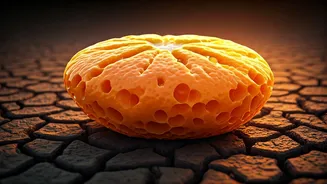
Orange peels, often discarded as mere kitchen or juice industry refuse, harbor a hidden potential due to their inherent composition. These peels are rich in natural compounds such as pectin and cellulose, both known for their remarkable moisture-absorbing properties. Through specific processing techniques, these components can be transformed into hydrogel structures – materials with an extraordinary capacity to hold significant volumes of water. In the realm of agricultural research, hydrogels are already recognized for their ability to enhance soil moisture. The hydrogel developed from orange peels functions on this same principle. When incorporated into the soil, it diligently soaks up water from irrigation or rainfall, subsequently releasing it slowly over extended periods. This mechanism is particularly beneficial for arid and sandy soils, which tend to lose moisture quickly, thereby helping to sustain plant life with reduced watering frequency. Early research indicates promising results in improving water retention across various soil types, signaling a fertile ground for further investigation.
Future Hurdles and Hopes
While the potential of orange peel-based hydrogels is significant, the path to widespread practical application involves navigating several challenges. Scientific studies highlight that the efficacy of hydrogels can vary considerably depending on the specific soil composition. For instance, the way these materials absorb and release water may differ substantially between clay-rich soils and sandy terrains, influencing their applicability for farmers in diverse geographical regions. A further consideration is that not all the water captured by the hydrogel might be readily accessible to plants, as some moisture can become bound within the hydrogel's molecular structure. Consequently, agricultural science experts emphasize the necessity for ongoing, in-depth research to ascertain potential long-term effects on soil chemistry and to optimize the hydrogel's performance across a spectrum of agricultural environments. Despite these challenges, the ongoing research into this biodegradable and sustainable solution remains a beacon of hope for water-scarce regions.