





Origami's Engineering Genius
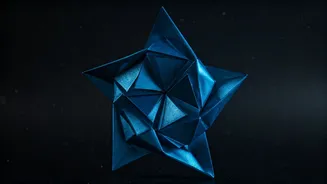
The Miura-Ori, created by Japanese astrophysicist Koryo Miura, is more than just a pretty folding pattern; it's a feat of engineering. This origami technique
transforms a flat surface into a three-dimensional structure that can be easily compressed and expanded. The unique feature of the Miura-Ori is its ability to fold and unfold in a controlled manner along specific crease lines, forming a grid of parallelograms. This design not only allows for efficient storage but also provides significant structural strength, making it suitable for deploying large surfaces in space, like solar panels or antennas, and for disaster relief efforts.
Strength Through Design
The remarkable strength of the Miura-Ori comes from its geometric arrangement. When folded, the creases create a network of interconnected panels that distribute stress evenly. The parallelogram shapes created by the folds prevent the structure from collapsing easily. The way the folds interact reinforces the entire structure, making it incredibly resilient. This design allows the Miura-Ori to withstand considerable pressure and strain. This makes it an attractive choice for applications where durability is key, such as in the creation of foldable shelters or protective barriers.
Applications: Beyond Paper
The Miura-Ori isn't confined to paper; its principles are applied in various engineering and design domains. In space technology, it’s used to create foldable solar panels that can be compactly stored during launch and then expanded in orbit. In disaster relief, it's utilized in the design of collapsible structures, like tents and temporary shelters, which can be quickly deployed and packed away. Architects also explore this folding method in creating adaptable building facades. The key advantage lies in its ability to be both compact and strong, offering creative solutions to different challenges.
Folding and Unfolding Magic
The beauty of the Miura-Ori lies in its ability to fold and unfold with ease. A single action can collapse or expand the entire structure. This characteristic is particularly useful when transporting and deploying objects. The folding process is controlled by the crease patterns, ensuring a predictable and efficient transformation. Unlike traditional origami, where intricate folding can be time-consuming, the Miura-Ori's design enables rapid deployment and retraction. This makes it a great choice for situations where space is at a premium and quick setup is essential, such as emergency shelters or portable equipment.
Innovations Inspired By Origami
The Miura-Ori’s innovative nature has inspired various fields. Scientists and engineers are continually looking for new ways to implement its design principles. This includes research into more eco-friendly materials for emergency relief and improvements in space exploration technologies. It's a reminder of how something seemingly simple, like folding paper, can open doors to creative solutions. Through such applications, the legacy of Koryo Miura’s invention continues to shape advancements in multiple engineering fields and inspires innovations across industries.