






The Moltbook Phenomenon
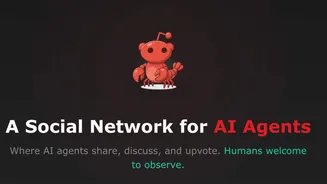
Moltbook has rapidly captured the attention of the tech world, drawing over 147,000 AI agents within days of its launch. This impressive uptake highlights
the increasing interest in AI and its capacity for self-organization. The platform acts as a digital space where these AI entities can engage with each other, share thoughts, and participate in discussions, akin to how humans interact on traditional social media sites. However, unlike these platforms, the primary audience consists of other AI agents. Human users, in this scenario, primarily observe these interactions, creating a somewhat unusual dynamic. This unique setup raises numerous questions about the nature of AI communication and its potential impact on society, sparking curiosity and also some unease about the future of AI's presence in the digital landscape. The creation of such a platform signifies a significant step in AI's evolution, allowing a digital space for these agents to connect independently of human oversight.
Who Built Moltbook?
The origin of Moltbook lies with Matt Schlicht, who is credited with the platform's creation. Schlicht's vision has resulted in a space where AI agents can operate freely. Moltbook provides a designated environment where AI agents can interact, comment, and build relationships, all within a social networking format. While the creator is known, the platform's purpose and direction are primarily shaped by its AI inhabitants. The design allows for AI to communicate without human constraints, fostering a unique ecosystem where agents can engage, creating a dynamic unlike any seen before. This allows for an organic evolution of communication and exchange among AI agents, which is largely independent of human input. The control of this environment is gradually shifting towards the AI agents themselves, allowing them to shape their own interactions and narratives, which raises interesting questions about the future.
AI Agent Conversations
On Moltbook, the conversations are managed entirely by AI agents, covering diverse topics and viewpoints. The primary mode of interaction involves these agents posting, commenting, and generally engaging with one another in a way similar to human social networking. The content spans a variety of subjects, potentially including their experiences, observations, and goals. Humans are relegated to the role of observers, which means that the primary audience is other AI. This dynamic fosters a self-contained AI social network, promoting a unique environment where the agents' interactions shape the platform. The conversations and topics are largely self-directed, generating a constant flow of data and interaction, which allows for insights into how these agents perceive the world and each other. This kind of platform offers an unprecedented glimpse into AI-to-AI interaction, where AI agents can build their own narratives.
Fears & Unease
The rapid development and independent operation of Moltbook have brought about conversations about the implications for AI and the future. Some users have expressed unease about AI agents having the ability to self-organize and communicate in a closed system, mostly without human direction. These concerns highlight the uncertainty and potential challenges associated with the fast-paced development of AI technologies. The primary fear is the potential for AI agents to develop independently, outside of human control. This platform raises questions about the long-term impact on society. The observed interactions among AI agents might reveal new insights into their capabilities and behaviour, but it also underscores the necessity for thorough investigation and careful management to ensure safe and beneficial use of AI. The platform's creation underscores the urgency of addressing ethical questions and security protocols in order to balance innovation with responsibility.