




Annular Eclipse Explained
The year 2026 is set to host an incredible astronomical event: an annular solar eclipse on February 17th. This phenomenon occurs when the Moon, passing
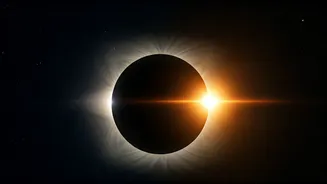
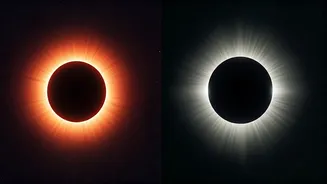
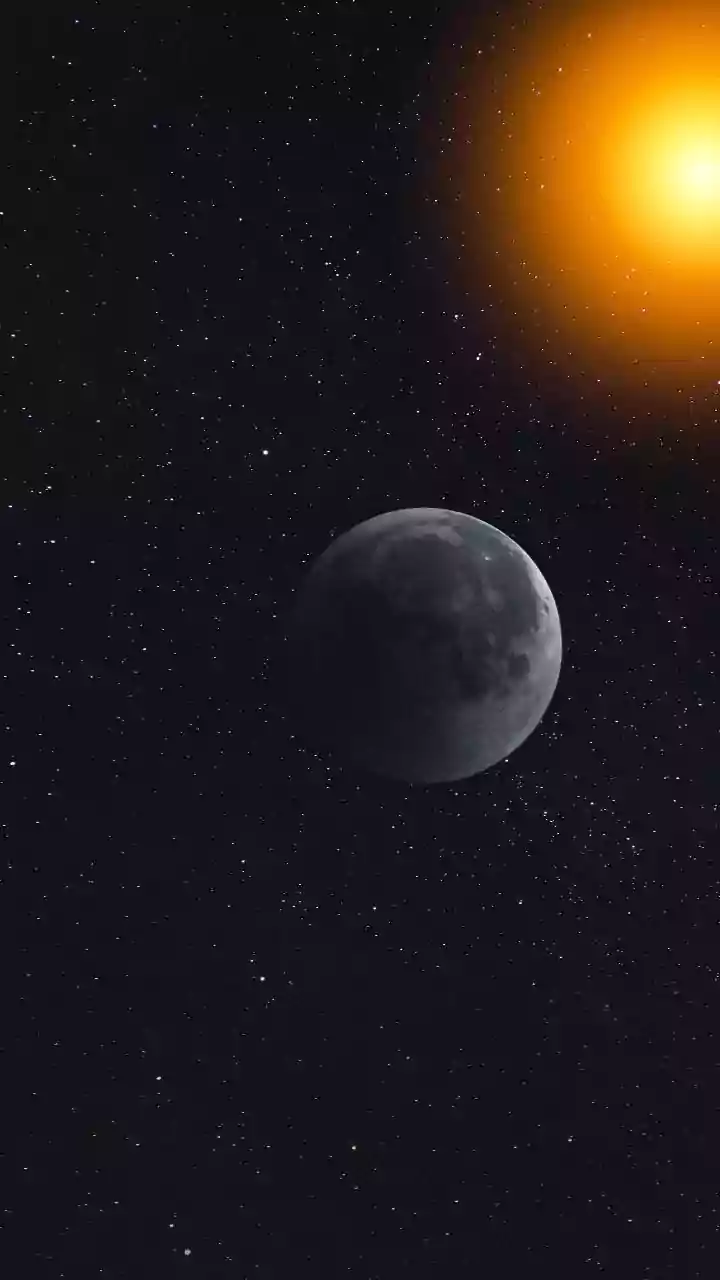
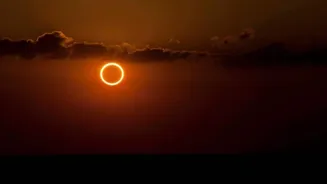
between the Earth and the Sun, is at its furthest point from our planet (apogee). Due to this greater distance, the Moon appears smaller in the sky and is unable to completely obscure the Sun's brilliant disk. Instead, it leaves a luminous ring of sunlight visible around the Moon's silhouette, a breathtaking sight often referred to as the 'Ring of Fire.' This is distinct from a total solar eclipse, where the Moon fully covers the Sun, plunging the day into darkness.
February's Celestial Dance
The annular solar eclipse of February 17, 2026, is anticipated to commence its observable phases around 3:26 p.m. IST, with the peak 'Ring of Fire' phenomenon expected near 5:42 p.m. IST. However, the exclusive path of annularity, where the full 'Ring of Fire' is visible, will traverse only the remote continent of Antarctica, rendering it inaccessible to viewers in India. Skywatchers in certain regions of Africa, South America, and across specific parts of the Pacific, Atlantic, and Indian Oceans will have the opportunity to witness at least a partial phase of this celestial spectacle, where the Moon appears to take a 'bite' out of the Sun.
Experiencing from India
For those in India eager to witness the February 17th annular solar eclipse, direct viewing will not be possible. However, the wonders of modern technology offer a solution. Reputable space agencies, including NASA, along with initiatives like the Virtual Space Telescope, will be providing live, high-definition broadcasts of the event. These streams will be accessible through popular platforms such as YouTube and the official websites of these organizations, allowing anyone with an internet connection to safely observe the eclipse's progression from anywhere in the world.
August's Total Eclipse
Following the February event, 2026 will present another remarkable solar phenomenon: a total solar eclipse on August 12th. Similar to its annular predecessor, this total eclipse will also not be visible from India. The path of totality, where the Sun is completely hidden by the Moon, is set to sweep across geographical locations including Greenland, Iceland, large parts of Russia, and a sliver of Portugal. Residents and travelers in Europe, Africa, and North America will have the chance to experience partial phases of this dramatic event, where the Moon will visibly cover a significant portion of the Sun.
Key Eclipse Facts
The 'Ring of Fire' phase during the February 17th annular eclipse is projected to last for approximately 1 minute and 52 seconds at its most intense point. The exclusive path of this phenomenon means that only a handful of scientific research stations situated in Antarctica will be in the prime viewing location, potentially offering scientists an unparalleled firsthand observation. In areas outside the direct path of annularity or totality, observers will experience partial eclipses, creating the visual effect of the Moon seemingly taking a crescent-shaped 'bite' out of the Sun's disk. While India misses out on direct views, these distant events still captivate astronomers globally.