






Sandy Surprise Awaits
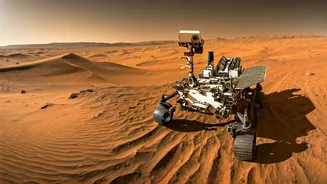
Upon reaching the recently discovered 10-meter wide crater, named Antofagasta, in April 2026, the persistent Curiosity rover encountered an unforeseen
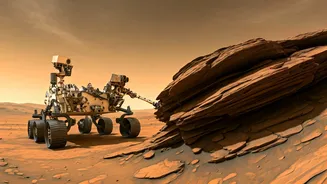
obstacle. Instead of the anticipated exposed rock layers, the crater floor was unexpectedly blanketed with dark, rippled sand. This wind-deposited material effectively obscured the older geological strata that scientists were eager to sample and analyze. The mission planners had initially intended to drill into these buried layers to glean insights into Mars' ancient environment. However, the deep and loose sand presented a significant risk: the rover could easily become mired and immobilized, jeopardizing the entire mission. Consequently, the planned drilling operation at Antofagasta had to be postponed indefinitely, necessitating a strategic re-evaluation of the rover's immediate objectives and exploration path.
Strategic Detour and New Goals
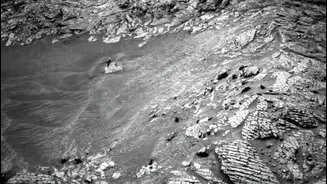
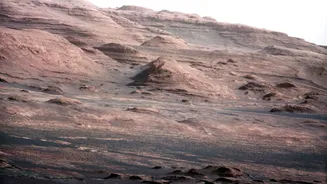
Given the high risk of entrapment within the sandy expanse of Antofagasta crater, the Curiosity team made the prudent decision to forgo drilling in that location. Instead of attempting to traverse the treacherous sand, the rover was redirected to examine the exposed bedrock formations situated around the crater's rim. These outcrops offered a safer alternative for immediate scientific investigation. While scrutinizing these surrounding rocks with its sophisticated camera and analytical instruments, the team also began identifying and evaluating potential new drilling sites. The primary focus for future sampling has now shifted to a region higher up on the Martian surface, characterized by 'boxwork' formations rich in sulfates. This new target, identified on Sol 4870 and tentatively named 'Atacama', presents a promising opportunity to gather samples that are expected to shed significant light on the complex geological history of the Red Planet and its potential to have once harbored life.
Adapting to Martian Terrain
The discovery of a sand-filled crater underscores the dynamic and often unpredictable nature of Martian exploration. While the presence of loose sand is a recurring challenge for rovers, Curiosity is specifically engineered with the resilience and adaptability to handle such environmental complexities. The temporary delay in drilling at Antofagasta is a testament to the mission's commitment to prioritizing rover safety and mission integrity over immediate objectives. Scientists are meticulously analyzing the composition of the sand encountered, which could itself provide valuable clues about Martian atmospheric processes and surface evolution over eons. The rover's extended mission objectives are designed to gather diverse data sets that will be instrumental in planning future human and robotic endeavors on Mars, making even unexpected detours valuable contributions to our understanding.