





Horses Transform Society
The domestication of horses stands as a monumental achievement, fundamentally altering human civilization. Originating likely on the vast Eurasian steppes,
these powerful animals moved beyond wild herds to become indispensable partners. Their integration into human life revolutionized warfare, enabling swifter cavalry charges and expanding military reach. Travel became significantly faster and more efficient, allowing for greater exploration and trade across vast distances. Furthermore, horses enhanced agricultural practices, providing the strength needed to till fields and transport goods, thus laying crucial groundwork for societal development and expansion.
Cattle and Their Gifts
The transformation of wild aurochs into the cattle we recognize today was a pivotal moment for early human societies. This domestication provided a consistent and reliable source of essential resources. Cattle offered a steady supply of meat, a crucial protein source for growing populations. Their milk provided a nutritious liquid that could be consumed directly or processed into dairy products, offering dietary diversity. Beyond sustenance, the sheer strength of cattle was harnessed for agricultural labor, enabling the plowing of fields and the transportation of heavy loads with carts, thereby boosting food production and trade capabilities.
Sheep and Goats
The taming of wild sheep and goats provided ancient communities with a dual benefit of sustenance and vital materials. Sheep were selectively bred for their fleece, yielding wool that was transformed into clothing, providing warmth and protection against the elements. Simultaneously, they served as a source of meat. Goats, known for their resilience and ability to thrive in diverse, often challenging terrains, were also domesticated for their meat, milk, and hides. Their hardiness made them particularly valuable to early farmers who needed adaptable livestock capable of surviving in varied environmental conditions, contributing significantly to early economies.
Pigs and Their Foraging
Domesticated from their wild boar ancestors, pigs offered ancient peoples a readily accessible and efficient source of protein and fat. Their value lay not only in the meat they provided but also in their natural foraging habits. Pigs are adept at searching for food, consuming a variety of edible matter from roots and insects to scraps, which made them relatively easy and cost-effective to maintain. This ability to subsist on diverse diets reduced the burden on human agricultural efforts, allowing these animals to thrive with minimal specialized feed, thus becoming a practical and valuable addition to early food systems.
Dogs: The First Companion
Dogs hold the distinction of being the earliest animal domesticated by humans, likely evolving from wolf populations. Their integration into human lives was multifaceted and profoundly impactful. Initially, they served as invaluable hunting companions, using their keen senses to track and corner prey, greatly enhancing the success rate of hunts. They also acted as vigilant guards, offering protection to human settlements and their inhabitants. Over millennia, this symbiotic relationship deepened, evolving into the companionship many humans cherish today, showcasing a bond forged over tens of thousands of years.
Donkeys and Their Endurance
Descended from the African wild ass, donkeys were domesticated for their remarkable strength and stamina, particularly suited for arid regions. These hardy animals proved to be exceptional pack animals, capable of carrying significant loads across long distances. Their reliability and endurance made them crucial for transporting goods, supporting trade routes, and enabling communities to thrive in challenging environments. In addition to their role as beasts of burden, donkeys also served as mounts, providing a steady and reliable means of transportation for individuals, further facilitating movement and interaction across territories.
Camels: Desert Navigators
The domestication of both dromedary and Bactrian camels was a transformative development for cultures inhabiting harsh desert landscapes. Dubbed the 'ships of the desert,' these animals were indispensable for trade and travel, enabling human expansion into previously inaccessible arid regions. Their physiological adaptations, such as the ability to store fat for energy and endure extended periods without water, made them uniquely suited to desert survival. This allowed for the establishment of vital trade routes, facilitating the exchange of goods and ideas across vast, inhospitable terrains, connecting distant civilizations and fostering economic growth.
Water Buffalo Strength
In many parts of Asia, the water buffalo was domesticated for its immense physical power and its rich milk. These robust animals played a critical role in agricultural practices, particularly in the cultivation of rice paddies. Their sheer strength allowed them to pull heavy plows through muddy fields, making intensive farming possible in wetlands. Beyond their labor, water buffalo provided a valuable source of milk, which is known for its high fat content, producing rich and creamy dairy products. Their dual utility in both fieldwork and food production made them a cornerstone of agricultural societies in the region.
Trained Elephants
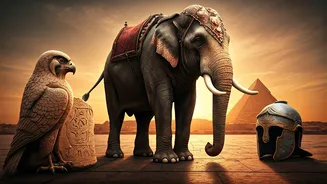
While not domesticated in the traditional sense of livestock, ancient cultures, especially in South Asia, achieved remarkable success in training and utilizing elephants. This process involved capturing wild individuals and patiently teaching them to perform tasks, ranging from their formidable use as war elephants to their application in heavy labor. The training required immense skill, deep understanding of the animal's behavior, and considerable time. These trained elephants became powerful assets in both military campaigns, instilling fear in opponents, and in large-scale construction and logistical operations, demonstrating a profound human capacity to work with massive wild creatures.
Cheetahs, Eagles, and More
Ancient peoples' ingenuity extended to even more surprising species. The Mughals of India trained cheetahs for accelerated hunting, deploying them from carts to pursue prey. In Mongolia, nomadic tribes mastered the art of golden eagle hunting, with trained eagles capable of taking down prey like foxes and small wolves. The ancient Egyptians integrated baboons into their lives, using them for tasks like fruit picking and as deterring agents in marketplaces, while also holding them in high religious regard. The Romans, surprisingly, raised dormice as a delicacy, developing specialized enclosures for fattening them. These diverse examples highlight a broad spectrum of human-animal interactions beyond typical livestock.