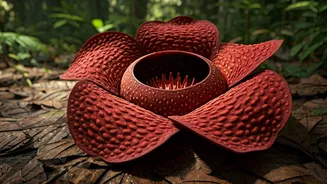







Titan Arum: Corpse Flower
The *Amorphophallus titanum*, commonly known as the corpse flower, rightfully earns its morbid name. Native to the rainforests of Sumatra, this colossal
flower is renowned for its overpowering stench, closely resembling that of rotting flesh. This aroma isn't a random occurrence; it's a strategic adaptation. The putrid smell is specifically designed to attract carrion beetles and flies, which are crucial for pollination. The flower's imposing size, coupled with its foul odor, serves as a beacon for these vital pollinators, ensuring the continuation of the species. The corpse flower's bloom is a rare spectacle, often taking years to develop and lasting only a day or two, making it a highly anticipated event for botanists and enthusiasts worldwide. The flower’s temperature increases during its bloom, adding to the illusion of a decaying animal and further enhancing the attraction of its pollinators.
Rafflesia: Another Stinker
Similar in its scent profile to the corpse flower, the Rafflesia is another master of mimicry. Found primarily in Southeast Asia, this parasitic plant lacks stems, leaves, and roots, relying instead on its host vine for sustenance. Its enormous flower, the largest single flower in the world, also emits a strong smell of decay. This scent strategy, like that of the corpse flower, effectively lures in carrion flies and beetles for pollination. The Rafflesia's appearance, often featuring reddish-brown petals marked with white spots, also contributes to its carrion-like allure. Despite its unpleasant odor, the Rafflesia is a vital component of its ecosystem. The pollination process is a delicate dance between the flower, its pollinators, and its host plant, demonstrating a complex interdependence in the rainforest environment. The flower's lifecycle is relatively short, making the chance to witness its bloom a special event.
Stapelia: Starfish Flower
The Stapelia genus, often called the starfish flower, boasts a variety of species, all known for their unusual appearances and, in many cases, unpleasant smells. Native to Africa, these succulents produce flowers that range in color and shape, but they share a common trait: the ability to attract pollinators using deceptive scents. The smells of Stapelia flowers vary across species, but common aromas include those of rotting meat, carrion, or dung. This olfactory trickery is used to lure flies, which mistake the flower for a suitable place to lay their eggs. The flowers often feature textures and patterns resembling decaying flesh to enhance the deception. While their fragrance might not be appealing, Stapelias are popular among plant enthusiasts for their unique blooms and relatively easy care requirements, with numerous cultivars now cultivated in various climates.
Bulbophyllum: Diverse Odors
The Bulbophyllum orchid genus contains a vast number of species, with many exhibiting unique and often pungent fragrances. Found worldwide, Bulbophyllum orchids have diverse appearances and smells, ranging from the more common putrid odors to scents of urine, sewage, or even overripe fruit. This varied approach to attracting pollinators highlights the evolutionary adaptability of orchids. Certain species employ scents that attract flies, while others might lure different insects with different fragrances. The variety in the Bulbophyllum genus is a testament to the dynamic relationship between orchids and their pollinators. These orchids showcase a wide range of adaptations, with some flowers also featuring vibrant colors and patterns. The diversity found in the smells and appearance reflects the wide distribution of these fascinating plants, which grow in various environments.
Lysichiton: Skunk Cabbage
Skunk cabbage, belonging to the *Lysichiton* genus, is aptly named for its strong, skunk-like odor. These plants are found in wetlands and marshes, particularly in North America and Asia. The pungent smell emanates from the plant's spathe, a modified leaf that surrounds the flower spike. This strategy effectively attracts carrion flies and beetles, which play a crucial role in pollination. The Skunk Cabbage bloom is an early sign of spring in many areas, as the plant can generate its own heat, melting the surrounding snow. The plant's distinctive odor and appearance make it easily recognizable. The skunk cabbage illustrates nature's cleverness in using smells to ensure survival and reproduction. The foul odor and unique appearance make these plants integral to their wetlands ecosystems, providing food and shelter for various creatures.