



Ancient Partnership Unveiled
For an astonishing 450 million years, a profound alliance has thrived beneath our feet between plants and soil fungi, a partnership that underpins the
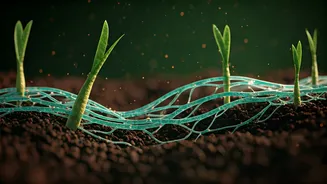
very existence of approximately 80% of plant species globally, including foundational food crops like corn and wheat. This ancient arrangement is a marvel of mutualism: fungi, with their extensive underground networks, diligently extract vital phosphorus and other essential minerals from the soil, channeling them to plant roots. In return, plants, through the miraculous process of photosynthesis, provide the fungi with life-sustaining sugars and fats. While the significance of this symbiotic relationship for agriculture has been recognized for decades, the precise molecular dialogues and signaling pathways that facilitate and maintain this intricate cooperation have remained largely elusive, presenting a persistent scientific puzzle.
New Tools for Discovery
A dedicated team at the Boyce Thompson Institute (BTI), spearheaded by Professor Maria Harrison, has ingeniously combined two cutting-edge molecular techniques to achieve unprecedented insight into plant-fungi interactions. These advanced methods enable researchers to pinpoint exactly which proteins are physically connecting and collaborating to ensure the success of this ancient partnership. Crucially, these tools allow for the direct visualization and confirmation of these protein interactions within the very living plant roots where the symbiotic exchange actually occurs. Historically, identifying these crucial protein partners has been a significant hurdle, primarily because the specialized root cells involved in nutrient exchange are exceptionally rare, constituting only a minuscule fraction of the total root tissue. "We had known for years that specific proteins were critical for establishing these symbiotic connections, but we lacked the ability to see who they were actively working with," explained Harrison. "These new instruments empower us to ask and definitively answer these questions directly within the cells where the partnership is actively functioning."
The Molecular Matchmakers
The innovative approach developed by postdoctoral researchers Sergey Ivanov, Lena Müller, and François Lefèvre involved the integration and refinement of two complementary research methodologies. Initially, they constructed an extensive library comprising a vast array of plant and fungal proteins. These proteins were then systematically analyzed using a sophisticated screening system within yeast cells, designed to detect interactions between a protein of interest and thousands of potential molecular partners. The results of this large-scale screening were subsequently deciphered through DNA sequencing, essentially functioning as a high-throughput matchmaking service to identify which proteins physically bind to one another. Complementing this screening was a second technique that ingeniously adapted a well-established biological method. This adaptation causes proteins to emit a fluorescent signal exclusively when they come into physical contact within the living plant root cells. This fluorescence-based detection serves as a powerful confirmation, verifying that the protein interactions initially identified in the yeast screening are indeed occurring in the correct cellular locations inside living plants, specifically at the cellular membrane interface where the critical nutrient exchange takes place.
Testing the System
To unequivocally demonstrate the efficacy of their novel approach, the researchers specifically focused on a protein known as CKL2, a component previously established as indispensable for the proper development of plant-fungal partnerships. Experiments had shown that without CKL2, the symbiotic relationship simply fails to form correctly. The large-scale screening experiment revealed that CKL2 exhibits its strongest interactions with proteins belonging to the 14-3-3 family. These 14-3-3 proteins are known to play a fundamental role in cellular biology, acting as connectors for other proteins and regulating a diverse range of essential cellular activities. Further validation was provided by the fluorescence-based test, which confirmed that these specific CKL2 and 14-3-3 protein interactions are occurring precisely at the periarbuscular membrane, the specialized cellular boundary that serves as the vital interface for nutrient exchange between plants and fungi. To quantify the importance of this interaction, the scientists experimentally reduced the levels of 14-3-3 proteins within plant cells. This intervention resulted in a significant decrease of approximately 31% in fungal colonization, strongly indicating that these proteins play a substantial and critical role in maintaining the integrity and functionality of the plant-fungus symbiosis.
Future Agricultural Impact
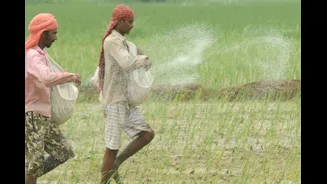
The enhanced understanding of how plants and fungi precisely coordinate their ancient partnership at the molecular level holds immense potential for revolutionizing agricultural practices. By deciphering these intricate communication pathways, scientists and plant breeders can embark on developing novel crop varieties that are predisposed to form more robust and efficient symbiotic relationships with beneficial soil fungi. Crops that can more effectively acquire phosphorus and other essential nutrients through their fungal partners would consequently require significantly less synthetic fertilizer. This reduction in fertilizer reliance would not only lead to substantial cost savings for farmers but also contribute to a healthier environment by minimizing fertilizer runoff into waterways, a major cause of pollution. The research team is committed to democratizing this scientific advancement by making these invaluable experimental resources readily available to the broader scientific community. This accessibility will empower other laboratories worldwide to further investigate the myriad of proteins involved in this globally significant and agriculturally vital biological relationship, ultimately paving the way for more sustainable and resilient food production systems.